
How EMC 2.0 Is Transforming India’s Electronics Manufacturing

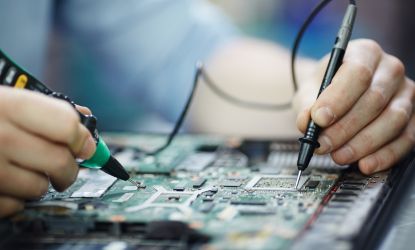

Through its Electronics Manufacturing Clusters (EMC) Scheme, the Government of India is looking to provide its citizens with an opportunity to participate fully in the global economy through the manufacture of electronic products. In addition to providing Indian manufacturers with access to necessary resources (infrastructure), EMF helps to establish a viable linkage between Indian manufacturers and large-scale foreign investors who are looking for sites to locate and build their facilities. EMC has helped create over one hundred thousand direct and indirect jobs in India, as well as billions of dollars of foreign investment. The increasing demand for electronics globally has caused many foreign electronics companies to look to India for new opportunities. It has also helped to accelerate the development of an electronics manufacturing ecosystem within India, thus increasing the potential for further expansion.
With an increasing global demand for electronics driven by smartphones, electric vehicles, industrial automation, IoT and renewable energy, India is well-positioned to be a viable alternative for traditional electronics manufacturers. Through its EMC program, the Government is addressing one of the largest obstacles that manufacturers face: the ability to obtain the necessary high-quality industrial infrastructure.
Understanding the EMC 2.0 Scheme
EMC 2.0 is an improved version of the previous EMC framework created to support the creation of state-of-the-art electronics manufacturing facilities in all states of India rather than just building new greenfield facilities. In contrast to the previous EMC Framework, which had a primary focus on the establishment of new greenfield facilities, EMC 2.0 allows for both the establishment of new and the redevelopment of existing facilities. EMC 2.0 intends to create the necessary world-class infrastructure needed by electronics manufacturers such as reliable power sources, water supply, waste management, testing labs, logistics connectivity and shared services. The elimination of the infrastructure bottlenecks would allow manufacturers to reduce their operating costs, accelerate their time to market and to efficiently increase their manufacturing capabilities.
For any project under EMC 2.0, the Government of India will provide financial assistance up to a maximum of 50% of the total project cost for new greenfield facilities and 75% for the redevelopment of existing brownfield facilities subject to certain ceilings. By offering such financial incentives for the establishment of electronics manufacturing facilities in the states, both the state governments and private business owners are encouraged to become actively involved in the establishment of electronics manufacturing clusters within their state.
Job Creation: A Major Economic Multiplier
The EMC 2.0 program will create about 1.80 lakh jobs directly in manufacturing; indirectly through the logistics and services sectors; and induced jobs through local nearby communities where EMCs are established.
Electronic Manufacturing is labour-intensive because of the high levels of assembly, testing, packaging, quality control, and maintenance required. Additionally, EMCS require ancillary businesses, such as component suppliers, tool manufacturers, packaging suppliers, freight providers and Facilities Management Services to provide supply chain support for the factory floors.
Beyond factory work, this scheme will also create engineer, technician, R&D and design specialist level positions that will help elevate India’s higher value manufacturing capabilities and facilitate innovation driven growth.
Strengthening India’s Electronics Manufacturing Ecosystem
EMC 2.0 is planned to provide the necessary infrastructure to facilitate future growth in India’s electronics manufacturing sector.
1) Reducing Import Dependency
The manufacture of key electronic components in India’s electronics manufacturing sector is primarily reliant on imported products such as semiconductors, printed circuit boards, and display panels. EMC 2.0 will promote the local manufacture of these components through the establishment of clusters that support the entire production process, from raw materials to the assembly of final products.
2) The Advantage of Scale and Efficiency
The cluster-based manufacturing model is advantageous for companies because they can share resources, thereby benefiting from economies of scale. Common facilities, including testing laboratories, certification centres, and logistics hubs, can significantly reduce the amount of capital invested, particularly for small and medium enterprises.
3) Enhanced Participation of MSMEs
By eliminating barriers to entry, EMC 2.0 will provide additional opportunities for Indian MSMEs to participate in global electronics supply chains. Subsequently, MSMEs can compete with large OEMs while benefiting from access to advanced technology, infrastructure, and markets.
Attracting Global and Domestic Investments
A key objective of EMC 2.0 is to attract foreign direct investment (FDI) while also encouraging domestic manufacturers to expand operations within India. Global electronics majors increasingly view India as a strategic manufacturing destination due to rising geopolitical diversification, cost competitiveness, and a large domestic market.
With EMC 2.0 offering ready-to-use infrastructure and financial support, India becomes more attractive for companies looking to set up mobile phone manufacturing units, consumer electronics plants, automotive electronics facilities, and industrial electronics production lines.
State governments also play a critical role by offering additional incentives such as land subsidies, tax benefits, and fast-track approvals—making EMCs competitive at a global level.
Driving Regional and Balanced Industrial Growth
In addition to its support for manufacturing facilities, the EMC 2.0 initiative places great emphasis on the development of regionally-based industrial clusters, thereby enabling the transfer of new economic activity from the usual industrial centres to many geographic locations throughout the nation. Historically, most of the growth in the electronics manufacturing sector has occurred only in urban centres; now, thanks to the development of electronics manufacturing clusters, where the state supports many manufacturers to combine resources and share costs, semi-urban and rural regions in India can potentially be converted into technology-driven manufacturing zones with improved infrastructure, skills and incomes. The decentralisation of the electronics manufacturing sector supports the broader objective of inclusive and balanced economic growth for India.
Synergy with Skill Development and Innovation
EMC 2.0 will rely on skilled manpower, infrastructure and innovation. Also, many Clusters will be developed in partnership with Technical Institutions, Skill Development Centers and Industry Associations.
EMC training programs are geared towards creating a workforce ready for the future by providing training in the areas of Electronics Assembly, PCB Design, Embedded Systems, Test and Quality Control. In the future, EMCs can become innovation hubs that support product design, prototyping and research and development that will help move India up the electronics value chain.
Challenges and the Road Ahead
While EMC 2.0 is a well-structured initiative, its success will depend on effective execution. Key challenges include timely project approvals, coordination between central and state governments, availability of skilled labour, and integration with global supply chains.
Additionally, sustained policy stability and continuous upgrades in infrastructure will be essential to ensure long-term competitiveness. Addressing issues related to logistics efficiency, power reliability, and environmental sustainability will further enhance the attractiveness of EMCs.
Conclusion: A Strategic Step Toward Electronics Leadership
By providing essential building blocks for long-term industrial growth through infrastructure development, job creation, investment attraction and ecosystem development, the EMC 2.0 Scheme represents a critical step in positioning India as a leading global electronics manufacturer. It will create an estimated 180,000 jobs and strengthen domestic supply chains while enhancing India’s competitiveness globally, making the EMC 2.0 Scheme an integral part of India’s overall industrial strategy. The EMC 2.0 Scheme will help transform India’s digital and manufacturing capabilities and continue to support the ongoing electronics revolution as its implementation ramps up.
 Follow the Bisinfotech WhatsApp channel to stay updated on India’s new technology ecosystem