The Reluctant Revolutionary – India Legal

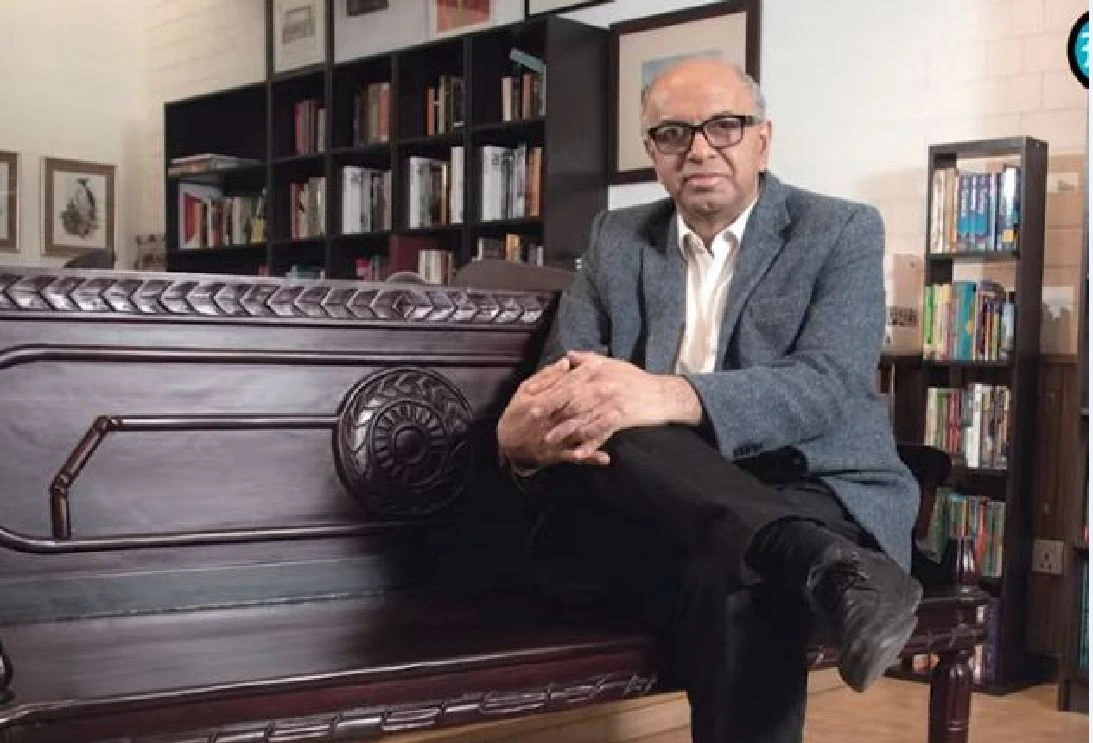

By Kumkum Chadha
Sanjeev Bikhchandani has been nicknamed the “father of start-ups”: till then a concept unknown, at least in this part of the world. Some also call him the “Sachin Tedulkar of the dot.com business”. Modest as he is, he shrugs off these descriptions.
“Exaggerated…flattering, but exaggerated. Being available for younger people gives me that title. It does not mean I deserve it and I don’t take it seriously because every start-up has its own father,” he said in an exclusive interview to a prominent national daily quite dismissive of the fact that it was he who kind of revolutionized the world of start-ups. “We did not call it start-ups then but said entrepreneurship,” he said.
Of course till he started he was not familiar with an e-mail: “What is an e-mail,” he had asked a stall keeper at an exhibition in Pragati Maidan in New Delhi.
Like most young people, Bikhchandani was unclear about what he wanted but unlike most was “very clear” about what he did not want: “Main business karoonga, naukarinahin karoonga” is what he told himself at school-this being the most prominent feeling, the minor ones being “main cricketer banoonga” or “Rajesh Khanna banoonga“. The Rajesh Khanna bit was inspired by the popular film Haathi Mere Saathi.
Contrary to his resolve, he did take up a job-a kind of a burden that he carried for years till he made it big on his own.
Till he did that, life was kind of meaningless. “For me moving from a small cabin to a bigger one, having a car which was several inches longer than my neighbours or having a bigger house meant little. What will I have to show for myself when I retire? I asked myself.” It was this question that haunted him—a question that ultimately changed his destiny.
Today, Bikhchandani is a name to reckon with—an Indian who founded the job portal Naukri.com, jeevansaathi.com and 99acres and later funded food delivery chains like Zomato and so on and so forth.
For someone who was not obsessed with earning money, Bikhchandani made to the Forbes list of India’s rich-grabbing a position among the 100 richest tycoons. And once money started coming in it did not stop.
This in no way suggests that Bikhchandani did not have his days of struggle-he did. Starting off from a servant quarter, he survived barbs like “the man lives off his wife’s salary”. It was a truth he could not escape because for a considerable period of time his wife did
support him and the family. “The kitchen”, he said in the interview, “ran from her money”.
When he quit his job with a multinational company, he had no fallback, but he knew that it would be now or never. His father was a government servant, actually a doctor, something he had decided never to be. “My milieu was middle class, service class, and there was no business in the family. You know, there are children who do what their fathers and parents do and there are those who would do anything but, so I was in the second category.”
It was that but which led him to do things different from his parents and ultimately reach the skies, so to speak. “I was clear I would not be a doctor or join the government. I knew what I would not do, but was equally unclear about what I would.”
A daydreamer, he moved from dream to dream and finally “made up my mind to do my own thing”. It was not being Rajesh Khanna or a cricketer, but doing business. To say it was not easy would be an understatement. He has roughed it out, literally and “been through all stages of the journey”. To quote him: “Bootstrapping,venture capital, finding customers, selling, skilling the organization, building technology products, going public… for 35 years I have had that experience which we are always willing to share with others.”
Looking back, he still feels he has a long way to go. “The truth is as an entrepreneur you never arrive because in your head there is always more,” he said.
So has he been there and done it all? He said: “No, been there yes… done it all no. So, I don’t think I will ever arrive,” adding that there are many unwritten stories waiting to be written.
The beginning was perhaps when he saw young people in his office reading a magazine from the back page; in fact, they would skip the news pages and go for the ads. “Every time the office copy of Business India would come in and would go from desk to desk, I noticed that everybody read it from the back. Back in those days, there were 30-40 pages of appointment ads on the back pages so people looked at the ads first and not the main articles. Very often they would not even read the articles. That is when the penny dropped. Fact number one: jobs are of high category interest; second in the open hall that I was sitting I found that every week two or three head hunters would call up several of my colleagues. There were no mobile phones and these calls would be on the landline and I also found that these jobs were in different companies and not advertised in print. That is when I realized that what appears in print is a tip of the iceberg and there is a much larger market in hundreds of companies and jobs are high interest category. So, I got these two insights, but I didn’t know what to do with them. I drifted for seven years.” But the idea stuck; the seed had been sown and once the journey began there was no looking back.
Till he made it big, Bikhchandani survived on what he calls “jugaad”. He had no money and whatever he had saved, some Rs 60,000, he blew it up in the stock market. He took up a part-time teaching job. “I was being paid roughly Rs 275 an hour and I made about a thousand rupees a week. It was enough to survive. Did small time jobs and also dabbled in journalism,” he said recalling the past.
It was in 1996 that Bikhchandani saw the internet for the first time. “At an exhibition, I saw a small stall with a www. I asked the stall guy what this was and he said email.” After he explained the nitty gritty, his reaction was: “Yeh to fail hoga. The logic: who will I send an email to because there are not many who have an email. It is like having the only phone in the world so who will I talk to?”
But there was another aspect that Bikhchandani had overlooked till the stall guy called him back and said: “There is also an internet. I had never heard of it until the guy explained that through the internet you can sit in your home office, log in and access information stored in thousands of companies around the world. He went to Yahoo and said what do you want to search and I said: India. Once he did that a whole bunch of webpages came out.”
The penny dropped, yet again. “I said we should take jobs from newspapers around the country and put them on the net and see what happens.” The rest, as they say, is history.
Today, Bikhchandani sits smug, looking around with satisfaction at the empire he has created, but it is not the end of the road for him. There are many more miles he wishes to tread.
—The writer is an author, journalist and political commentator