
Union Budget 2026: Food, Air and Jobs India Can’t Ignore

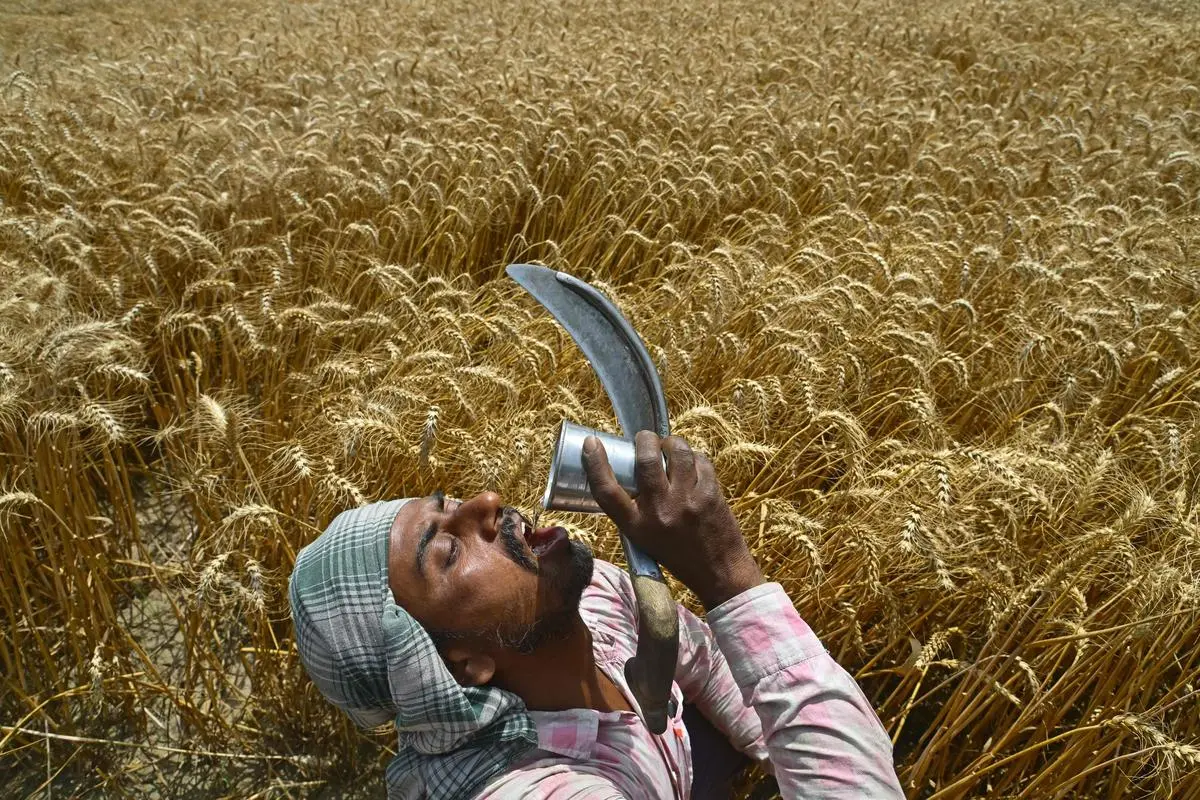

In a matter of days, India’s Finance Minister will present her ninth Union Budget to the country. Analysis invariably follows, attempting to decode what is essentially a taxation and expenditure document. But if one were to consider what the Budget could accomplish in its most ambitious form, the answer may lie in a return to fundamentals: food, clean air, and jobs.
India’s key inflation rate began showing signs of a rise in December last year, though it remains within the Reserve Bank’s target band. Food prices are not part of core inflation figures, but they remain volatile, and households across the country feel the pinch when they climb.
Even as the Reserve Bank and the government point to an inflation cooldown, data reveals a steady increase in grain stockpiling through 2024. By December 2025, government rice reserves stood at approximately 57.6 million tonnes, nearly 12 per cent higher than the previous year. In late August, the Centre issued orders tightening wheat stock limits across the country, imposing stricter caps on the quantities traders and retailers could hold—a measure aimed at curbing hoarding and ensuring adequate market supply.
Why has the government embarked on this stockpiling exercise? Part of the rationale appears precautionary—a response to an increasingly uncertain global environment. Another part may be political: ensuring key food items remain available in an emergency preserves leverage.
But a third, increasingly apparent factor is climate uncertainty. This is pushing the Centre to internalise risk around the most basic danger: hunger. In the 2025 Global Hunger Index, India ranked 102nd out of 123 countries for which sufficient data was available. With a score of 25.8, India’s hunger levels have been categorised as serious. Despite the massive stockpiles, the figures suggest distribution remains inadequate. Over 80 crore beneficiaries receive subsidised or free grains, yet India still imports more than half its edible oil requirements.
The most troubling statistic concerns persistent malnutrition among children. The National Family Health Survey (NFHS-5, 2019-21) shows 35.5 per cent of children under five are stunted, 19.3 per cent are wasted, and 32.1 per cent are underweight.
This Union Budget needs a credible food security plan that accounts for changed climate realities and nutritional needs. It also requires a public distribution system less prone to leakage and wastage, and an economic approach that moves beyond stockpiling grains and clamping down on exports when shortages arise.
India fares poorly on another index. It ranked 176th out of 180 countries in the 2024 Environmental Performance Index compiled by Yale University. According to the 2024 IQAir World Air Quality Report, India was home to six of the nine most polluted cities in the world.
None of this is surprising for people living in India. The absence of a coherent policy approach over the past decade has exacted a monetary toll on the economy and, more gravely, on public health. A 2019 Global Burden of Disease study published in Lancet Planetary Health estimated that 1.67 million premature deaths in India were linked to air pollution that year, with a significant proportion among adults over 50. Those estimates have risen since.
For the BJP, which now governs a wide swathe of the country most affected by air pollution—from Gujarat to Bihar and Uttarakhand to Maharashtra—there is no excuse for the absence of a coherent response. And there is no economic argument for inaction. If the Finance Minister and the Union government are serious about combating air pollution, this Budget should mark the first meaningful step towards that goal.
Over the years, announcements on employment have featured large numbers and bold targets. In the 2024-25 Budget and in subsequent policy statements, the Finance Minister announced a slew of jobs-focused measures: spending $24 billion over five years to spur employment, a scheme targeting one crore youth over five years, and a pilot project under the PM Internship Scheme, with 1.25 lakh opportunities in large companies. A review of these programmes and how far they have progressed would provide a useful starting point for assessing the depth of the jobs crisis.
In September 2025, Morgan Stanley warned that India’s economy would need to expand at an extraordinary 12.2 per cent pace each year to solve its underemployment crisis, flagging the risk of social strains as millions remain locked out of productive work. The private sector has dragged on industrial growth, exports have suffered from American tariffs, and significant changes to H-1B visa costs and availability spell further trouble for tech companies.
Morgan Stanley’s own estimates placed youth unemployment at 17.6 per cent—the highest in the region—accompanied by a surge of workers into agriculture, pushing farm employment to a 17-year high. This reflects underemployment, with a large share of the workforce stuck in low-productivity work.
Along with auditing existing jobs programmes and allowing for clearer unemployment data, the Finance Minister may also need to explain why the Mahatma Gandhi National Rural Employment Guarantee Act (MGNREGA) was repealed in December 2025 to introduce what critics describe as a dismantling of the rights-based approach. The new legislation, the Viksit Bharat—Guarantee for Rozgar and Ajeevika Mission (Gramin) Act, has drawn sharp criticism from grassroots organisations and policy veterans who spent years conceptualising and defending MGNREGA as the world’s largest such programme.
This Budget, like many before it, is no magic pill. But it can serve as a step towards addressing the basic building blocks for what is billed as a booming economy.
Mitali Mukherjee is Director of the Journalist Programmes at the Reuters Institute for the Study of Journalism, University of Oxford.
Also Read | Finger in the dyke
Also Read | The biggest loser of 2024? India’s middle class