
Skills-based architecture (SBA) focuses on skills not job titles

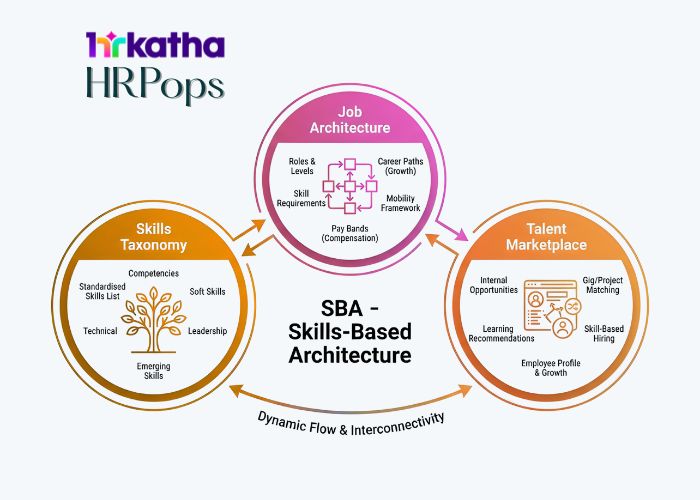

Skills-based architecture (SBA) is a modern HR framework that organises work around skills rather than static job descriptions. Instead of defining employees by what their business card says, SBA defines them by what they can actually do—their capabilities, expertise, and potential. This allows organisations to redeploy talent quickly, adapt to change, and break free from traditional hierarchies.
An SBA comprises three elements: a skills taxonomy—a standardised list of organisational skills; a job architecture—a framework linking skills to roles, pay bands, and career paths; and a talent marketplace—platforms where employees match their skills to projects or opportunities.
The benefits are clear: greater workforce agility, transparent career progression, fairer compensation and enhanced employee engagement.
The job architectures of the 20th century focussed on titles, hierarchies, and duties—designed for stability in industrial settings. Flexibility was limited, causing pay inequity and restricted progression.
In the 1990s–2000s, globalisation and digital transformation challenged static job models. HR experimented with competency frameworks, but these remained role-centric.
After 2010, SBA emerged as AI, automation, and gig work required fluid models. Deloitte and other consultancies popularised skills-based organisations, arguing traditional structures were too slow for the pace of change.
By 2025, 98 per cent of executives planned to adopt skills-based approaches, recognising that millions of jobs would go unfilled without reskilling.
Skills-based architecture helps HR identify skill gaps and design targeted learning programmes. It supports workforce planning by aligning skills with business priorities. By tying pay to skills rather than titles, it reduces inequity and promotes fairness.

Employees see clear pathways to growth based on skills acquired, encouraging continuous learning. The architecture enables organisational agility, allowing rapid redeployment of talent—critical in industries facing disruption. It integrates with HR technology platforms like AI-driven talent marketplaces, ensuring frameworks remain current through real-time data.
Here’s the uncomfortable truth: most organisations implementing SBA get it wrong. They build elaborate taxonomies, invest in expensive platforms, announce bold transformations—then watch as nothing changes.
Why? Because culture eats strategy. Employees and managers cling to traditional titles because titles confer status, identity, and power. Stripping them away threatens egos and hierarchies.
Data accuracy is another problem. Skills inventories become outdated fast. Without continuous updating, SBA becomes another HR system gathering digital dust.
Implementation is devilishly difficult. SBA requires strong technology, leadership buy-in, and fundamental rethinking of how work is organised. Many organisations lack the infrastructure or courage to see it through—implementing SBA in name only whilst continuing to hire, promote, and pay based on titles.
There’s also the pay equity paradox. SBA promises fairer compensation by linking pay to skills, but determining the value of skills is just as subjective as valuing titles. Without careful design, SBA can perpetuate the same inequities it claims to solve—just with different labels.
Skills-based architecture represents a paradigm shift, moving from rigid hierarchies to dynamic, skill-driven ecosystems. Today it is indispensable for HR leaders building resilient, fair, and future-ready organisations.
But SBA is not a silver bullet. It requires cultural transformation, technological investment, and relentless commitment. Done well, SBA unlocks potential and democratises opportunity. Done poorly, it becomes another failed HR initiative—a beautiful idea that never quite becomes reality.
The question is: does your organisation have the courage to truly let go of titles? Or will SBA remain what it is in most places—a framework that promised revolution but delivered only new jargon?