
India Supreme Court Ruling: Moonlighting Legal Clarity



India’s Generation Z is fundamentally redefining career success. Rather than sticking to a single job for traditional long-term stability, young professionals are looking for part-time jobs as well. They look to combine their mainstream jobs along with freelance projects, and side hustles to build financial resilience for the future, especially during the current times of uncertainty.
According to the news agency, ANI, a new study by the largest office space provider in the world, the International Workplace Group (IWG), states that this shift is driven by rapid Artificial Intelligence (AI) adoption, rising living costs, urban commute fatigue, and a strong demand for workplace flexibility.
AI impact on youth psychology
India’s gig economy come to the rescue of youth
Salary growth
Hybrid work enables ‘side hustle’ era
Do India’s laws allow employees to work in multiple offices simultaneously?
As remote work and side hustles become mainstream, the debate over moonlighting (holding a secondary job alongside full-time employment) continues to challenge corporate India.
According to Kumar Anurag Singh, advocate, Supreme Court of India, India’s laws do not explicitly ban dual employment. But citing a recent landmark Supreme Court ruling, he said that the top court has supported employers whereever there has been a breach of trust or conflict of interest by the employee because of moonlighting.
Employment contracts matter most: SC advoocate
According to Singh, contrary to the popular belief, there is no single law in India that prohibits workers from taking up a second job. Instead, the legality of moonlighting depends heavily on individual circumstances:
Employment Contracts: Courts generally enforce non-compete and exclusivity clauses during an employee’s tenure.
Conflict of Interest: Taking on work with a direct competitor or misusing a primary employer’s confidential data remains illegal.
Performance: Dual employment becomes a legal concern if an employee’s primary productivity suffers.
Supreme Court on moonlighting:
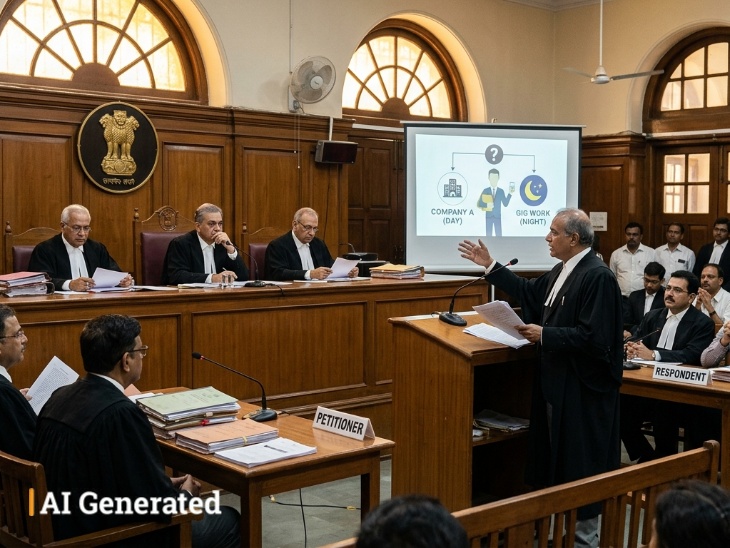
The top court had given a landmark judgment in ‘State of Jharkhand v. Ranjan Kumar (2026)’ case.
In this case, the Supreme Court confirmed the termination of a police constable who secretly held simultaneous full-time positions in two state police departments using different identities.
While the ruling involved a government official, according to Singh, the Court established a vital principle for all employment sectors: simultaneous employment is strictly illegal if it involves deception, dishonesty, breach of trust, or a conflict of duty.
The SC ruling underscores that employment contracts are built on good faith, and hiding secondary work to deceive employers can lead to immediate legal termination.
Moonlighting laws in European countries:
According to Singh, in Europe, countries like the Netherlands permit employees to take up secondary work unless it directly damages the employer’s legitimate business interests.
2nd job in urban India:
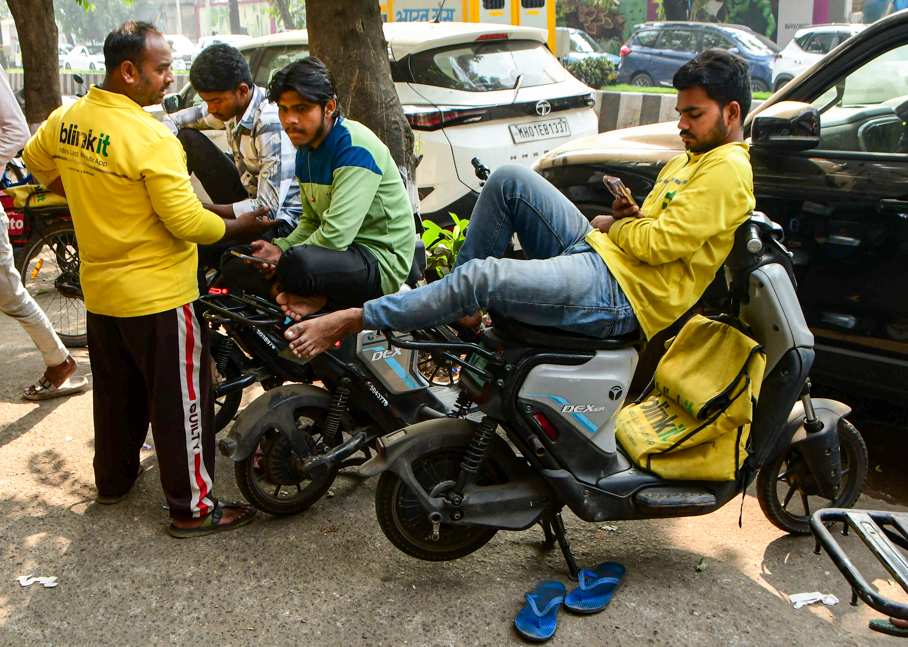
Credit: PTI
Secondary income has long been an economic necessity in India. Urban professionals rely on freelancing and gig economy works as secondary involvement apart from their mainstream jobs.
2nd job in rural India:

Photo by Kailash Kumar from Pexels: https://www.pexels.com/photo/labour-day-12075976/
According to Singh, rural workers routinely combine farming with seasonal labour or self-employment in India. But he adds this is their “economic necessity” and not a choice.