At ‘Chhatron ki Goonj’ in Prayagraj, Rahul Gandhi Blames Modi Govt For Youth Despair, Paper Leaks and Lack of Jobs

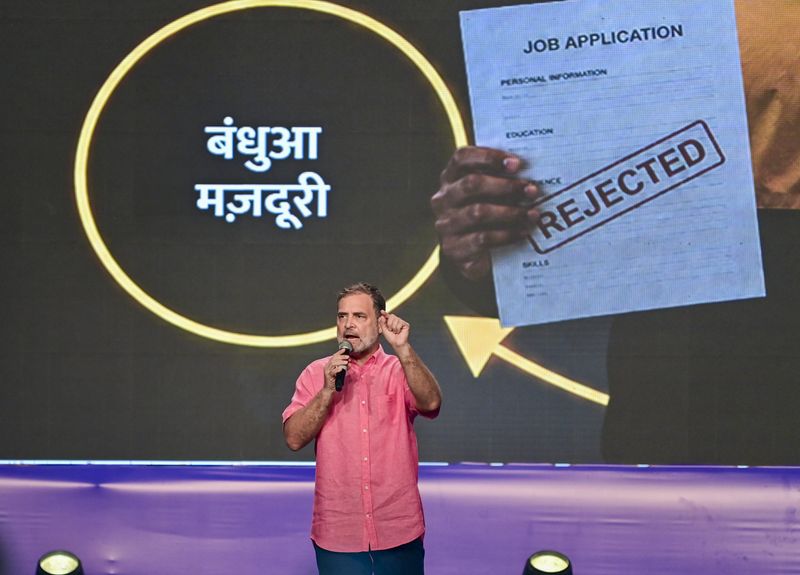

Gandhi alleged that the data created by the youth was being exploited to benefit big corporates, and that shrinking job opportunities had turned youngsters into “21st-century labourers”, forced to toil as gig workers.
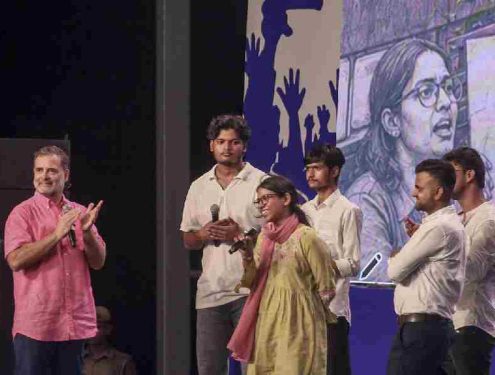
New Delhi: Leader of Opposition Rahul Gandhi on Saturday (August 8), in a concert-like ‘Chhatron ki Goonj’ outreach programme in Prayagraj, Uttar Pradesh, described India’s youth as its biggest strength as he called several of them onto the dias, and blamed the Union government for the lack of jobs, expensive education, paper leaks, poor access to credit and the growing use of AI for holding the youth back.
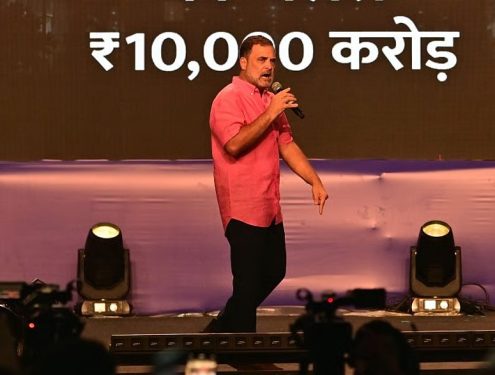
Addressing the gathering at K.P. Ground in Prayagraj, the Congress leader said, “You are the power and pride of India; when I say this, I talk about every Indian citizen.” He said he wanted to speak about “dard (pain), data and daulat (wealth)” and talk about the problems facing young Indians and the economic resources he believes should belong to them.
Gandhi traded his trademark white T-shirt for a pink shirt this time. “Yuva (youth) + data = 21st century economy,” he said, pointing to the screen behind him.
Days ahead of the scheduled date, the ‘Chhatron ki Goonj’ programme had hit a bureaucratic roadblock. The campaign, which is supposed to be an interaction between the Lok Sabha MP and students preparing for different competitive exams was scheduled to be held on August 8. However, the Kayastha Pathshala Trust, which manages and is the official caretaker of KP Ground, has revoked the permission for the event, citing an Allahabad high court order dated August 14, 2025.
The Wire has reported that the official letter issued by Chaudhary Jitendra Nath Singh, working president of the Kayastha Pathshala, said that permission was withdrawn as “students of two schools are likely to be affected”. The event was eventually held on Saturday.
At the event, Gandhi alleged that the data created by the youth was being exploited to benefit big corporates, and that shrinking job opportunities had turned youngsters into “21st-century labourers”, forced to toil as gig workers.
Speaking about his connection to the city, Gandhi called it his family’s home and an important educational centre. He spoke about Allahabad University’s history as one of the best universities in the country and said that the youth was now being trapped in a “chakravyuh”, with education becoming increasingly expensive while degrees and certificates fail to translate into jobs.
“Today, education certificates have no meaning in India because they cannot give you a job,” he said, arguing that students could spend years and large amounts of money on education without finding meaningful employment. He further spoke about the addiction created by this void of jobs.
“Out of every 1000 young people, only 12 land a permanent job. As for your data, it is taken away from you; it is handed over to major corporations – Jio, Adani, Facebook, and Google – and you are ensnared. You are told to watch as many reels as you like, send as many WhatsApp messages as you wish, and browse or create content on Instagram.
“This is the addiction of the 21st century and then you are told to work for Blinkit or Uber, or to do manual labour. You can indulge in this 21st-century addiction, but you cannot get a job; you cannot find employment in this country,” Gandhi alleged.
“All doors of employment are closed in India,” he said, pointing to a decline in manufacturing, difficulties in securing loans, government-exam paper leaks and AI replacing jobs and pushing young people into gig work. He also accused the Modi government’s demonetisation and GST initiatives for hurting small industries, alleged that banks were failing to provide adequate credit to small and medium businesses, and criticised the privatisation of public-sector companies.
He alleged that large corporations, the government and the RSS had exercised disproportionate influence over India’s institutions.
Speaking about the recent student protests in Delhi and other cities across India, he said that it was a sign that young Indians were beginning to challenge the system.
“Youths lit a light in darkness, and in doing so, changed the country,” Gandhi said, urging people to keep challenging the system and face their fears without resorting to hatred or violence.
“You cannot hate or be violent,” he stressed, “We will never resort to hatred or violence; will change the system with love and affection.”
This article went live on August ninth, two thousand twenty six, at thirteen minutes past ten in the morning.
The Wire is now on WhatsApp. Follow our channel for sharp analysis and opinions on the latest developments.