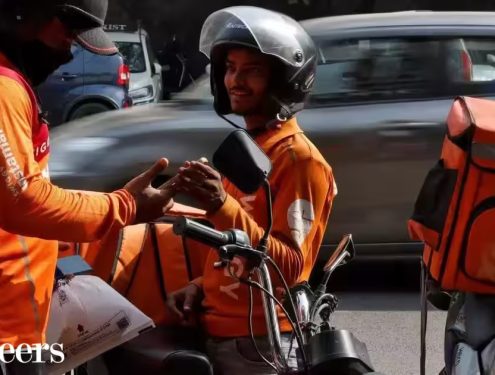
India’s gig workers need more effective protection



This incident happened just before Rakshabandhan: The security personnel stationed at the society gate called to inform that the mehndiwallah (henna artist) had arrived. My daughter had scheduled his services through an app for 8.30 in the evening, but he was running two hours late. When we opened the door, an overworked, exhausted man stood in front of us. We could see he was in no position, physically or mentally, to perform this delicate task. My daughter offered him water and asked why he was so late.
Buckling under the emotional weight he had been carrying, he said, “Madam, since morning, none of the clients adhered to the appointment timing, so work starts late and finishes late. I can’t say anything because they can complain or, worse, give a bad rating. Based on the feedback, the company can block me.”
“I am on the bike all day long for my commutes, get stuck in traffic jams, and wade through water-logging. The company wants everything on time, but it’s not in my hands. When I used to work in the village, the earning was less but people respected me. Now it seems I have turned into a machine.”
Overwhelmed by his plight, my wife and daughter offered him dinner but he declined politely: “It’s against the company policy, and I have another visit.” He was bracing for a “no entry” in that society as he was already late. The next day’s first booking was again at 8.30 am.
Also Read | Invisible second shift in India’s gig economy
Our metropolises have turned into mirages. The same day, I read that, buoyed by the start of the festive season, companies have initiated fresh hiring of gig workers. Companies providing such workers think that this year, 2.5-3 lakh new jobs can be created. They are expecting an increase in hiring by 8-15%.
This trend isn’t restricted to metropolitan cities: Small towns and even the interiors need more hands. But such hiring is transient. The moment festive demand subsides, the jobs will vanish too.
Companies hiring gig workers operate on the principle of “use and throw”. No one is sacked but are removed using technical grounds. As soon as festive and discount seasons of big companies end, incentives for the delivery partners are discontinued. Their app, using technical jargon, blocks their ids. This trend has dealt a body blow to the humane side of employment.
Even those constantly engaged in earning a living are subjected to inhuman stress. Pressure of delivering on time has led to accidents in some cases. According to Niti Aayog, 27% of the gig workers in India face accidents (minor or serious). Muscle pain and other issues due to long hours, including driving with heavy loads, is a common problem. Treatment is long and expensive and demands rest. However, if you don’t log into the app for a long period, you run the risk of being locked out.
Still, gig workers are increasing by the day.
According to the Niti Aayog. in 2021, there were 77 lakh gig workers in India. In the last four years, this workforce has registered a whopping 55% increase. Niti estimates that, in the next four years, the numbers will reach 2.3 crore — 6.7% of the non-agriculture workforce.
Nearly 23% of this workforce is concentrated in the National Capital Region. Today, apart from the marquee apps, there are many regional apps that cater to demand in the interiors and hills. This new work culture has changed the face of the Indian labour market. Sparkling uniforms, clean taxis or bikes, and direct bank transfers for quick payment look quite attractive from a distance. But it’s the illusion of formalisation — it has severed the human cord that held humans and their work together. Earlier, there was a personal touch between the employer and the employee. Today, labour management is hijacked by opaque algorithms.
Gig workers also act as useful tools to hide actual unemployment. Many times, people with higher education degrees turn to this work in the absence of any credible employment as they don’t want to be labelled as unemployed. Another dark side of the whole affair is the critical shortage of workers it’s creating in agriculture and small industries. There’s a huge social angle to it too. Unemployed young don’t want to do “small jobs” near their homes or their villages. Instead, they head to big cities and work under inhuman conditions.
It’s clear that problems for gig workers are piling up faster than the rate at which gig workers are increasing. It’s time that we make tough laws and regulations to safeguard gig workers’ economic and social security, like Europe has. Rajasthan has shown the way. It’s time for the Centre and other states carried the baton.
A progressive society runs on policies and regulations, not on algorithms.
Shashi Shekhar is editor-in-chief, Hindustan. The views expressed are personal