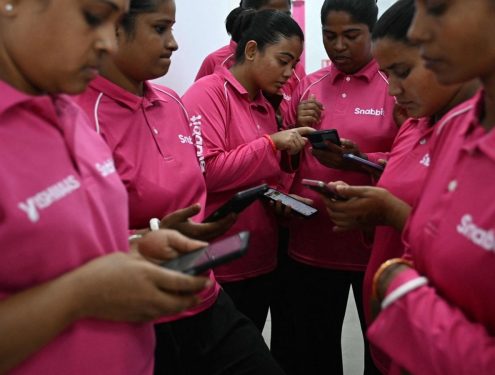


This editorial is based on “India’s gig workers need more effective protection” published in The Hindustan Times on 31/08/2026. The article highlights that festive hiring masks severe exploitation. Algorithmic control, unpaid wait times, and weak social security endanger millions of gig workers, demanding robust statutory regulations and portable welfare safeguards.
India’s expanding gig economy offers flexible employment but exposes millions to precarious conditions, income insecurity, and opaque algorithmic control, as highlighted by app-based workers facing arbitrary suspensions. While the Code on Social Security, 2020 offers a foundation, comprehensive legal reforms, portable social benefits, fair pay, and strict algorithmic accountability remain urgent priorities to ensure sustainable and dignified livelihoods for gig workers.
What is the Gig Economy?
- About: The gig economy is a labour market in which individuals undertake short-term, task-based, on-demand or freelance work instead of holding a conventional, long-term job with a single employer. Payment is generally made per task, trip, delivery, assignment or project.
- Under the Code on Social Security, 2020, a gig worker earns through work performed outside the traditional employer–employee relationship.
- Gig Work and Platform Work: Gig worker is a broad category covering anyone engaged in temporary or task-based work outside regular employment. E.g., freelance writers, photographers, consultants, construction workers, tutors and independent technicians.
- Platform worker is a subset of gig workers who obtain work through an online digital platform or mobile application. E.g., drivers on Uber, Ola and Rapido; delivery partners associated with Swiggy, Zomato, Blinkit and Zepto; and service professionals working through Urban Company.
- Thus, all platform workers are gig workers, but all gig workers are not platform workers.
- Platform worker is a subset of gig workers who obtain work through an online digital platform or mobile application. E.g., drivers on Uber, Ola and Rapido; delivery partners associated with Swiggy, Zomato, Blinkit and Zepto; and service professionals working through Urban Company.
- Key Features of the Gig Economy:
- Task-based engagement: Workers are paid for completing specific trips, deliveries or projects rather than receiving a fixed monthly salary.
- Flexible working arrangements: Workers can generally decide when, where and how long to work, although platform incentives and algorithms may indirectly control these choices.
- Multiple sources of income: A worker may simultaneously work for several platforms, for example, a driver may accept rides from both Ola and Uber.
- Technology-mediated matching: Digital platforms connect customers with workers, determine prices, allocate tasks and process payments.
- Algorithmic management: Ratings, incentives, penalties and automated account suspension influence workers without conventional supervision.
- Worker-owned assets: Drivers and delivery workers often provide their own vehicles, smartphones, fuel and maintenance, transferring substantial operating costs to workers.
- Status of the Gig Economy in India:
- Rapidly Expanding Workforce: According to NITI Aayog’s report, India’s Booming Gig and Platform Economy may reach 2.35 crore by 2029–30.
- By 2029–30, gig workers may constitute 6.7% of India’s non-agricultural workforce and 4.1% of the total workforce.
- Diverse Skill Composition: According to NITI Aayog estimates, gig work is distributed across medium-skilled (47%), low-skilled (31%), and high-skilled (22%) occupations.
- The share of high-skilled gig work is projected to increase to approximately 27.5% by 2030, reflecting growing demand for software development, finance, design, education and professional consulting.
- Expansion Across Economic Sectors: Gig work has expanded far beyond cab services and food delivery into diverse sectors, including e-commerce and logistics (Amazon, Flipkart, Porter, Ecom Express), household and professional services (Urban Company, Upwork, Freelancer), digital education (online tutors, content creators, ed-tech), and online healthcare.
- Growing Formal Recognition: The Code on Social Security, 2020, integrated gig and platform workers into India’s labour-law framework for the first time by providing schemes for life and disability protection, accident insurance, health and maternity benefits, old-age protection, and other government-notified benefits.
- It also provides for a Social Security Fund and requires aggregators to contribute 1–2% of their annual turnover, subject to a ceiling of 5% of the amount paid or payable to gig and platform workers.
- Registration through e-Shram: 12 major aggregators, including Zomato, Blinkit, Urban Company, Uber, Amazon, Ola, Swiggy, Rapido and Zepto, had been onboarded by January 2026. Around 5.12 lakh platform workers were registered by December 2025.
- State-Level Initiatives: States have begun developing separate welfare frameworks:
- Rajasthan: Enacted the Rajasthan Platform-Based Gig Workers (Registration and Welfare) Act, 2023, providing for worker and aggregator registration, a welfare board and a transaction-based welfare fee.
- Bihar: Enacted the Bihar Platform-Based Gig Workers (Registration, Safety and Welfare) Act, 2025.
- Karnataka: Introduced a platform-based gig workers’ welfare framework providing registration, social security, transparency in automated decision-making and grievance redressal.
- Rapidly Expanding Workforce: According to NITI Aayog’s report, India’s Booming Gig and Platform Economy may reach 2.35 crore by 2029–30.
What is the Significance of the Gig Economy for India?
- Addresses India’s Employment Challenge: The Economic Survey 2023–24 estimated that India must generate about 78.5 lakh non-farm jobs annually until 2030. Gig work provides an additional employment channel for young people, migrants and those unable to secure regular salaried jobs.
- Platforms such as Rapido, Porter and Urban Company allow workers to enter the labour market with relatively limited formal qualifications.
- Facilitates Women’s Economic Participation: Flexible and remote assignments allow women to combine paid work with care responsibilities and overcome constraints related to mobility and fixed working hours.
- According to the report, ‘Decoded: Women and the Future of Digital Work in India,’, women constituted approximately 28% of the gig workforce. Online tutoring, content creation, teleconsultation and services offered through platforms such as Urban Company illustrate this potential.
- Strengthens India’s Digital Economy: Gig work converts digital connectivity into productive economic activity by combining smartphones, digital identity, GPS and instant payments.
- In July 2026, UPI processed approximately 23 billion transactions worth nearly ₹30 lakh crore, enabling instant and low-cost payments to drivers, delivery partners, freelancers and small service providers.
- Supports E-commerce and Last-Mile Delivery: Online retail cannot function efficiently without delivery, warehousing and logistics workers.
- Gig workers help companies such as Amazon, Flipkart, Swiggy, Zomato, Blinkit and Zepto deliver products quickly and serve areas where maintaining a permanent workforce may be costly.
- During the Covid-19 lockdowns, delivery workers became essential links for supplying food, medicines and household goods.
- Expands Market Access for MSMEs: Gig workers provide small businesses with affordable logistics, marketing, accounting, website development and customer-support services without requiring permanent recruitment.
- The Open Network for Digital Commerce has enabled deliveries across more than 700 districts, while its 2026 DigiDukaan initiative connected over 13,000 retailers in Hyderabad and Jaipur.
- Freelance and logistics workers make such digital expansion operational.
- The Open Network for Digital Commerce has enabled deliveries across more than 700 districts, while its 2026 DigiDukaan initiative connected over 13,000 retailers in Hyderabad and Jaipur.
- Promotes Entrepreneurship and Asset Utilisation: Gig platforms enable individuals to convert skills and assets into income-generating resources. A vehicle owner can offer rides, a technician can provide repair services, and a professional can sell consulting or design services.
- For example, Porter connects vehicle owners with businesses requiring local freight transport, while Urban Company enables skilled workers to reach customers without maintaining separate commercial establishments.
- Encourages Portable and Universal Social Security: Traditional welfare is usually linked to a single employer, which is unsuitable for workers operating across multiple platforms.
- The gig economy has encouraged India to develop worker-linked systems based on a Universal Account Number, e-Shram registration and portable benefits.
- Rajasthan’s 2023 legislation introduced a transaction-linked welfare fee, while Bihar and Karnataka have developed specific frameworks for registration, welfare funding and grievance redressal.
What are the Major Challenges Associated with the Gig Economy?
- Low and Uncertain Earnings: Gig workers are paid per ride, delivery or assignment rather than receiving a fixed salary. Their earnings fluctuate with demand, platform commissions and frequently changing incentive structures.
- The Fairwork India Ratings 2024, which assessed 11 major platforms, found considerable gaps in ensuring earnings equivalent to a living wage after work-related expenses; Ola, Uber and Porter scored zero overall across the assessed fair-work standards.
- Unpaid Waiting Time and Worker-Borne Costs: Workers are generally paid only after accepting and completing a task, even though considerable time may be spent waiting or travelling to the customer.
- Drivers and delivery partners also bear the costs of fuel, vehicle loans, maintenance, smartphones, mobile data and insurance.
- A European Commission report found that platform workers on average spend around 9 hours per week doing unpaid tasks against 12.6 hours doing paid tasks.
- Limited Social-Security Coverage: Most gig workers lack assured provident fund, pension, paid leave, maternity protection and unemployment insurance.
- Although India had over 31 crore total e-Shram registrations by July 2026, only about 5.12 lakh platform workers had been specifically registered by December 2025. This is a small share of the country’s platform workforce and illustrates the continuing identification and coverage gap.
- Opaque Algorithmic Control and Arbitrary Deactivation: Workers often do not know how platforms calculate ratings, assign orders, determine incentives or block accounts.
- A 2025 survey of 60 platform workers in Hyderabad found that 45% had experienced account suspension or blocking, while 66% considered grievance mechanisms ineffective and 56% were unable to contact a company representative when facing a problem.
- Although limited in sample size, the study illustrates the absence of accessible human review.
- A 2025 survey of 60 platform workers in Hyderabad found that 45% had experienced account suspension or blocking, while 66% considered grievance mechanisms ineffective and 56% were unable to contact a company representative when facing a problem.
- Occupational Safety and Excessive Working Hours: Drivers and delivery workers face road accidents, air pollution, extreme heat, heavy rainfall and fatigue. Incentives linked to completing more trips can encourage speeding and longer working hours.
- According to NITI Aayog data, 27% of Indian gig workers face accidents, alongside chronic muscle pain and financial distress without paid sick leave.
- Gender, Digital and Social Inequalities: Women face safety concerns, restricted mobility, harassment, unpaid care responsibilities and limited ownership of vehicles and smartphones.
- They may therefore remain concentrated in lower-paid activities such as online microtasks, beauty services and home-based freelancing.
- Ambiguous Employer–Employee Relationship: Platforms describe workers as independent contractors, although algorithms may determine fares, allocate work, impose performance standards and deactivate accounts.
- This enables platforms to avoid many conventional employer obligations concerning minimum wages, regulated working hours and compensation.
- For example, an Uber driver may choose when to log in but cannot independently negotiate the fare charged for an assigned ride.
International Best Practices
- European Union: The EU Platform Work Directive provides protections against opaque algorithmic management and requires human oversight of important decisions.
- United Kingdom: In Uber BV v. Aslam, 2021, the UK Supreme Court treated Uber drivers as “workers”, entitling them to minimum wage and paid annual leave.
- Spain: Spain’s “Riders Law” presumes employment for delivery riders where platforms exercise algorithmic control and requires disclosure of information affecting working conditions.
- Singapore: The Platform Workers Act, 2024 provides protections relating to work injuries, retirement and representation while creating shared contribution responsibilities for platforms and workers.
ILO Convention No. 193
- The Decent Work in the Platform Economy Convention, 2026 (No. 193) was adopted by the International Labour Conference in June 2026. It is the first international labour standard devoted specifically to platform work.
- It seeks protection in areas such as:
- Fundamental rights at work
- Fair remuneration
- Working-time protection
- Occupational safety and health
- Social-security coverage
- Freedom of association and collective bargaining etc.
- The Convention is important because it treats algorithms not merely as business technology but as instruments capable of exercising managerial power over labour.
How can India Balance Gig-Economy Growth with Worker Protection?
- Introduce a “Net Earnings Floor”: Instead of fixing only gross payment per task, platforms should ensure minimum net earnings after deducting fuel, maintenance, internet and other unavoidable expenses. The floor should vary by city and occupation and be automatically indexed to inflation and fuel prices.
- Create a “Social-Security Wallet”: Every gig worker should receive a portable digital wallet linked to e-Shram. A small welfare credit from each completed transaction could accumulate automatically and finance health insurance, pension, maternity support, paid medical leave and accident compensation, irrespective of how many platforms the worker uses.
- Establish Independent Algorithm Audits: A specialised Platform Work Regulatory Authority should audit algorithms for discriminatory task allocation, arbitrary rating deductions and unfair incentive systems. Platforms can protect commercial secrets while submitting their systems to confidential third-party audits, similar to financial and cybersecurity audits.
- Provide a Worker-Controlled Digital Reputation Passport: Skills, ratings and verified work history should belong to the worker rather than remain locked within one platform. A consent-based, interoperable “Gig Worker Passport” would allow an experienced driver or technician to transfer reputation across Ola, Uber, Rapido, ONDC and other platforms, reducing dependence on a single company.
- Introduce “Safe Mode” during Extreme Conditions: Platforms should automatically activate a safety protocol during heatwaves, floods, severe air pollution and heavy rainfall. Delivery deadlines and rating penalties should be suspended, hazard allowances provided and refusal of unsafe assignments protected. Alerts issued by the IMD, NDMA and pollution-control authorities could trigger this mechanism automatically.
- Promote Worker-Owned Platform Cooperatives: Governments and municipalities should support cooperatives in which drivers, delivery partners and service providers jointly own the platform and share its profits. Kerala’s Kerala Savari offers an Indian precedent for a government-supported alternative in ride-hailing. ONDC can similarly enable worker cooperatives and small logistics firms to reach consumers without depending entirely on dominant aggregators.
- Create a Deactivation Escrow and Income Guarantee: Before suspending a worker, the platform should place a portion of the worker’s average weekly earnings in escrow. If an independent appeal finds the suspension unjustified, the worker should receive the escrowed amount as compensation. This would discourage automated or customer-complaint-based arbitrary deactivation.
Conclusion
India’s gig economy bridges employment gaps but relies on precarious, algorithmically controlled labour. While frameworks like the Code on Social Security mark a shift toward formal recognition, impact depends on whether flexibility brings enforceable rights. Sustainable growth requires transitioning to robust statutory protections, portable benefits, fair earnings, and strict algorithmic transparency. A progressive platform economy must ensure technology remains accountable to the rule of law, constitutional values, and human dignity.
|
Drishti Mains Question
Q. The platform economy has expanded employment opportunities in India, but has also transferred substantial economic and occupational risks from firms to workers. Analyse and suggest measures to ensure decent work in India’s gig economy.
|
Frequently Asked Questions (FAQs)
1. What is the distinction between a gig worker and a platform worker?
A gig worker is anyone engaged in temporary, task-based work outside traditional employment, whereas a platform worker is a specific subset who secures work exclusively through online digital applications or aggregators.
2. What are the key projections regarding India’s gig workforce by 2030?
According to NITI Aayog, India’s gig workforce is projected to reach 2.35 crore by 2029–30, constituting 6.7% of the country’s non-agricultural workforce.
3. How do international frameworks address platform economy challenges?
ILO Convention No. 193 (2026) treats algorithms as managerial instruments, setting international standards for fair remuneration, working-time protection, and freedom of association.
UPSC Civil Services Examination, Previous Year Questions (PYQs)
Prelims
Q. With reference to casual workers employed in India, consider the following statements: (2021)
- All casual workers are entitled for Employees Provident Fund coverage.
- All casual workers are entitled for regular working hours and overtime payment.
- The government can by a notification specify that an establishment or industry shall pay wages only through its bank account.
Which of the above statements are correct?
(a) 1 and 2 only
(b) 2 and 3 only
(c) 1 and 3 only
(d) 1, 2 and 3
Ans: (b)
Mains
Q. Examine the role of ‘Gig Economy’ in the process of empowerment of women in India. (2021)