
Who Lost Jobs in 2025? A Closer Look at This Year’s Biggest Layoffs

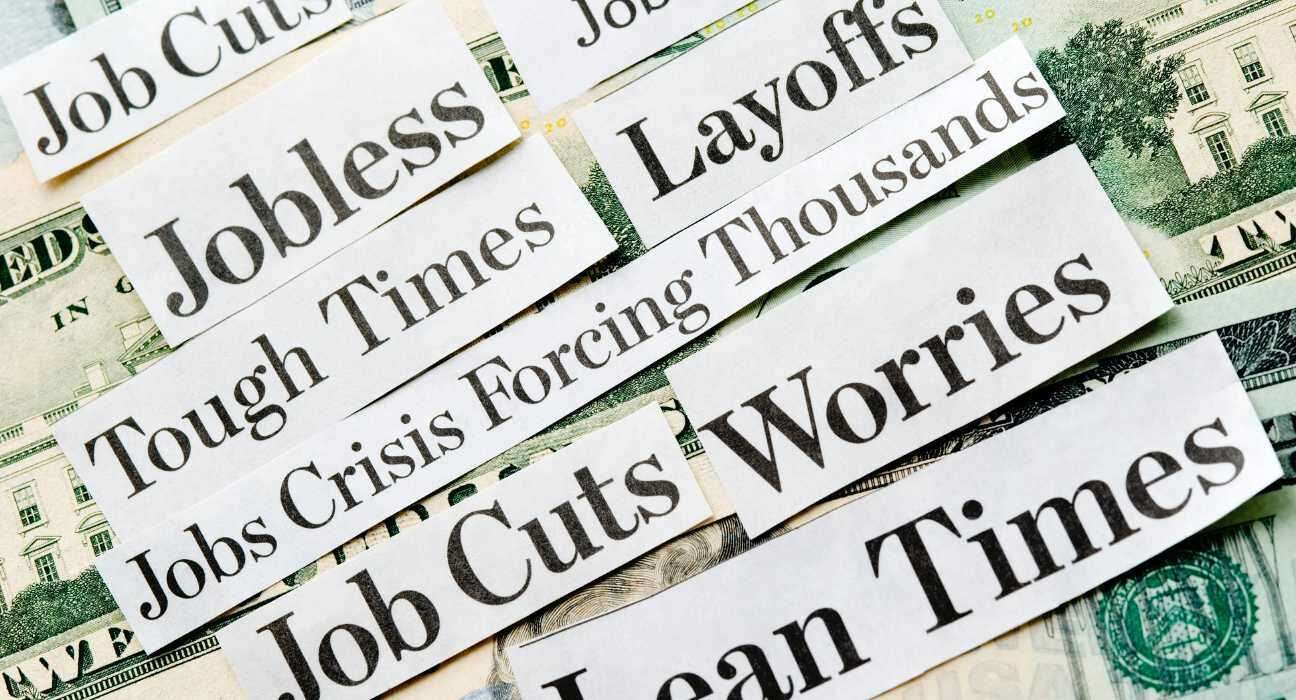

The year 2025 has turned out to be one of the harshest for workers across industries worldwide. From tech giants to traditional manufacturing firms, mass layoffs have swept through the global job market, leaving thousands unemployed and uncertain about their futures.
Economic slowdown, tariff wars, inflation, and the rapid integration of artificial intelligence into workplaces have combined to reshape corporate structures on an unprecedented scale. Companies that once expanded aggressively during the post-pandemic recovery phase are now reversing course, driven by a mix of cost-cutting, automation, and strategic restructuring. As the global economy adjusts to new trade realities and evolving technology, these layoffs reveal both the fragility of modern employment and the shifting priorities of corporate management.
Among the most striking announcements came from Intel, which unveiled in July 2025 its largest restructuring in decades. The semiconductor giant declared plans to cut 24,000 jobs, or roughly 22% of its global workforce. The decision came amid fierce competition from AMD and TSMC and the company’s own struggles with technical setbacks in chip manufacturing. Under its new CEO, Lip-Bu Tan, Intel is betting heavily on artificial intelligence and foundry services, hoping to regain lost ground in the semiconductor race.
The job cuts were deepest in the United States, with California and Oregon suffering major losses. Germany, Poland, and Costa Rica also faced sharp reductions. While the layoffs aim to save $10 billion annually, workers’ unions have raised concerns over the fairness of the severance process and alleged age-based discrimination. Intel’s stock fell by 8% after the announcement, reflecting both investor caution and the scale of the challenge ahead.
While private firms trimmed costs, the United States federal government carried out one of the largest workforce reductions in modern history. Through the Department of Government Efficiency, or DOGE, a project spearheaded by Elon Musk and Vivek Ramaswamy, 182,528 government jobs were affected. This included nearly 72,000 direct layoffs, with the rest leaving through attrition and program closures. The effort aimed to cut $2 trillion in spending and restructure Washington’s vast bureaucracy.
The effects were immediate; major departments such as the Environmental Protection Agency, the IRS, and several defence contractors lost thousands of employees. Supporters of the policy celebrated the move as an overdue correction to bureaucratic excess, while critics warned of serious consequences for essential services like veterans’ care and healthcare administration. Many mid-career federal employees found themselves jobless, and unemployment in the public sector rose sharply.
In the private sector, Amazon once again drew headlines with another round of deep workforce reductions. Between 14,000 and 30,000 corporate roles were eliminated as the company sought to scale back its pandemic-era overexpansion. CEO Andy Jassy described the restructuring as an attempt to make Amazon “operate like the world’s largest startup.”
The cuts targeted management and corporate divisions within AWS, operations, and HR, with Seattle bearing the brunt. Although employees received severance packages and accelerated stock vesting, morale across the company sank as return-to-office policies forced many indirect resignations. Still, investors approved the strategy, as Amazon shares rose 5% after the announcement, signalling confidence in the company’s leaner structure amid growing global trade pressures.
The logistics sector also faced turmoil. United Parcel Service (UPS) announced plans to cut between 20,000 and 48,000 jobs, around 10% of its workforce, citing disrupted supply chains caused by trade tariffs and a dip in parcel volumes. The decision affected both operational and corporate staff, with 93 facilities in the United States scheduled for closure. Unionised workers, represented by the Teamsters, negotiated retraining funds but could not prevent widespread job losses. Most affected employees received between one and two months of severance pay. With Amazon now handling more of its own deliveries, UPS is under pressure to modernise, focusing on automation and AI-based route management to cut costs.
In India, Tata Consultancy Services (TCS), one of the world’s largest IT services companies, also joined the layoff wave. The firm dismissed 12,000 employees, primarily at mid- and senior-level positions, in its largest job reduction to date. The layoffs were concentrated in Bangalore and Hyderabad, with the company citing declining global demand and a push toward AI-driven productivity.
CEO K. Krithivasan framed the decision as part of a transition toward generative AI and automation, with 100,000 employees set to be reskilled for new roles. However, critics in both India and the United States pointed out that the cuts coincided with ongoing trade restrictions and reduced outsourcing opportunities due to tariffs.
Europe saw similar restructuring waves, with Nestlé leading job cuts among consumer goods corporations. The Swiss food giant announced plans to eliminate 16,000 roles worldwide over two years, with around 8,000 already executed by November. The move targeted office-based employees rather than factory workers, with a focus on merging administrative functions and expanding automation. CEO Mark Schneider defended the decision as a way to reduce costs and invest in alternative food innovation, particularly in plant-based products. While Nestlé’s stock rose after the announcement, unions accused the company of prioritising profits over people and masking its cost-cutting as “digital modernization.”
In the tech industry, Microsoft continued its cautious restructuring, cutting 15,000 employees globally. The layoffs, which began in January and stretched through mid-2025, were concentrated in Azure, engineering, and sales departments. CEO Satya Nadella stated that the company was entering a “new AI era,” emphasising efficiency and innovation. However, the dissolution of diversity and inclusion teams drew backlash from employees and civil rights groups. While the layoffs improved Microsoft’s margins, they also highlighted the industry’s growing dependence on AI at the expense of traditional roles.
Meta, parent company of Facebook and Instagram, followed with its own reduction of 3,600 to 5,000 positions. Mark Zuckerberg’s “year of efficiency” extended into another cycle as Meta sought to redirect resources toward AI and metaverse projects. Reality Labs, the unit behind virtual reality, was hit hard. The company’s workforce now stands at around 80,000, down considerably from its 2022 peak. While Meta’s financials have improved, critics argue that the company’s massive investment in speculative technology has come at the cost of thousands of jobs.
In the energy sector, ConocoPhillips trimmed 20–25% of its staff, cutting roughly 3,000 roles as oil prices declined amid shifting global energy trends and rising electric vehicle adoption. The layoffs, primarily in the United States, were part of a $1.5 billion cost-saving effort. Environmental groups viewed the move as a step toward reduced drilling, though industry analysts warned that job losses could harm local economies dependent on oil production.
Even professional services were not immune. PwC, one of the world’s “Big Four” accounting firms, reduced its workforce by 5,600 globally, including 1,500 in the United States. The firm cited declining demand for traditional audit and tax services, shifting focus toward AI consulting and sustainability projects. The company promised reskilling programs, but the announcement reinforced a growing concern that even white-collar, high-skill roles are at risk as automation spreads.
Beyond these major cuts, several other companies have announced smaller but still impactful layoffs. Paramount Global reduced its media workforce by 2,000 to stabilise streaming losses. Procter & Gamble initiated a two-year plan to remove 7,000 non-manufacturing roles. Accenture cut 11,000 consulting jobs as clients reduced spending. In the automotive sector, General Motors paused electric vehicle production, laying off nearly 1,700 workers. Airlines, too, felt the squeeze; Southwest Airlines cut over 1,700 corporate jobs, the first in its history. Financial firms such as Morgan Stanley and BlackRock also trimmed their teams as interest rate fluctuations affected profitability.