
After 30 years, HR executive quits full-time job to work just 3 days a week

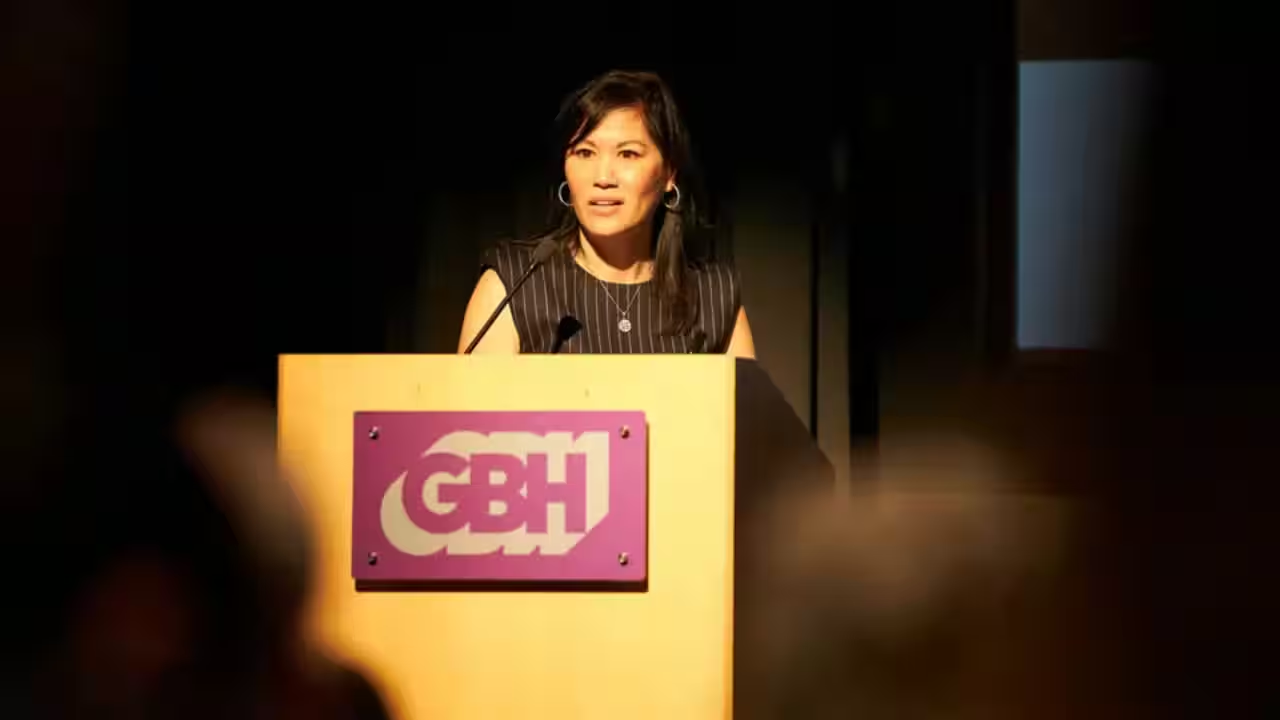




After 30 years of working in a demanding HR career, a 56-year-old senior HR professional decided it was time for a change. Rather than retiring completely, she chose to work just three days a week — a new phase she calls her “rewirement.”
Living near Baltimore, Angela Cheng-Cimini said the loss of several friends around her age made her rethink her priorities and how she wanted to spend her time.
Story continues below Advertisement
Why she left her full-time HR job
“A few years ago, my husband, Michael, and I started losing friends who were around our age,” she said. Three of them died from pancreatic cancer, which made her think more seriously about her own life and future.
“I’d been working full steam ahead for 30 years,” Cheng-Cimini said. She realised that she needed to take a step back and reconsider her priorities.
Story continues below Advertisement
According to
Business Insider
, “at the time, she was the chief HR officer at Harvard Business Publishing. She enjoyed the job, but its demands often followed her home.
“I didn’t know how to compartmentalise. I brought work home psychologically, emotionally, and, to some degree, physically,” she said.
She also realised that she had been neglecting her own wellbeing. After giving it considerable thought, she resigned in December 2024.
Story continues below Advertisement
From early retirement to “rewirement”
Some people saw her decision as early retirement, but Cheng-Cimini did not want to leave her career completely.
“I wasn’t ready to go the full nine yards and quit my career,” she said.
Instead, she started looking for a job that offered more flexibility.
She found a part-time chief HR officer position at the Chronicle of Philanthropy and started there in January 2025. She now works three days a week.
The job allows her to continue working while still receiving benefits such as health insurance, a 401(k) contribution and paid time off.
The arrangement works for both sides. Cheng-Cimini can continue using the experience she gained over three decades, while the organisation gets an experienced HR leader without hiring her full-time.
More time for mentoring and travel
The shorter workweek has also given her more time to mentor younger professionals. People often contact her through LinkedIn, and she now has time to speak with them without trying to fit mentoring into a busy work schedule.
“I felt that I should pay it back by paying it forward,” she said. When she began her career, there were few female Asian leaders she could look up to.
She also serves as an unpaid adviser to several HR start-ups, helping entrepreneurs evaluate their ideas and understand the market.
Outside work, she and her retired husband are spending more time travelling. They recently took a bucket-list trip down the Nile on a century-old steamship.
Cheng-Cimini plans to continue in her part-time role for as long as the organisation wants her. But she is also aware that she now has fewer years ahead of her than behind her. That has changed the way she thinks about work and free time.
“Wednesday afternoon comes along, and I’m ready to shut down my laptop after three days of work that stimulates my brain,” she said.
For Cheng-Cimini, “rewirement” is not about completely giving up work. Instead, it allows her to stay professionally active while making more time for travel, mentoring and the things that matter to her.
Discover the latest Business News, Sensex, and Nifty updates. Obtain Personal Finance insights, tax queries, and expert opinions on Moneycontrol or download the Moneycontrol App to stay updated!