
I imagined working in a 17th-century newsroom: Here’s what it looked like


Today’s workplaces, no matter where you are in the world, often look surprisingly alike. The buildings may differ in size and style, but step inside, and you’ll find familiar layouts, meeting rooms, workstations, coffee corners, and glowing computer screens. The colours may change, but the rhythm of the work feels almost universal.
I work in a digital newsroom, where every day revolves around breaking news, deadlines, edits and endless tabs open on a laptop. While every media organisation has its own identity, the workflow, the pace and the daily routine are remarkably similar across newsrooms.
Yesterday, as I wrapped up my shift and booked my ride home, an unusual thought crossed my mind: What if I did this job in the 17th century? What would a digital newsroom look like if it existed hundreds of years ago? How would deadlines, reporting, editing and publishing happen in an era without computers, electricity or the internet?
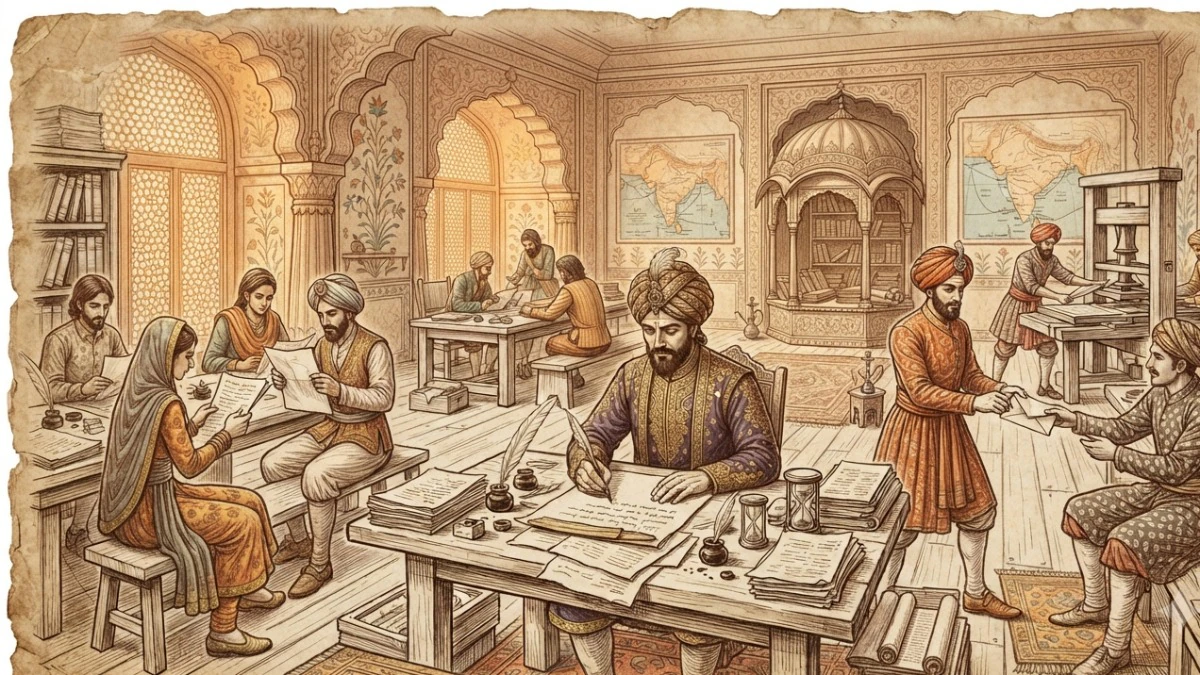
Curious, I decided to recreate that world. Using AI, I transformed moments from my workday into scenes that could have belonged to the 17th century.
Here’s what my modern newsroom might have looked like if it had travelled back in time.
Today, my office stands tall; a modern glass-and-steel building with a logo that proudly reflects more than five decades of journalism. It’s a place built for the digital age.
But what if the same newsroom existed in the 17th century?
The towering faade would give way to stone walls, timber beams, and arched windows. Instead of illuminated signs and glass entrances, it might have worn a carved emblem above a heavy wooden door. The purpose would remain the same, to tell stories, but the building itself would belong to a completely different era.
The reception is one of my favourite parts of the office. Even before you step onto the floor, you get a sweeping view of it from the lift. It’s spacious, welcoming and lined with moments from India’s history; visual reminders of the stories that have shaped the nation.
But in the 17th century, there would be no lifts opening into a bright, modern lobby.
Instead, you might climb a grand stone staircase into a hall lit by daylight, with wooden beams overhead, carved walls and historical murals replacing digital displays. The spirit of space would remain the same, even if everything else looked centuries older.
Next comes the newsroom; the beating heart of the office.
It’s a space that rarely slows down. Breaking news flashes across screens, stories take shape with every edit, and hundreds of journalists, editors and producers work in sync to bring the latest updates to readers every minute. The constant buzz is what gives the newsroom its energy.
But if this newsroom existed in the 17th century, the glow of computer screens would be replaced by candlelight, keyboards by quills, and digital dashboards by stacks of handwritten manuscripts. The urgency of reporting would remain, even if the tools belonged to another age.
Then comes my desk; my little corner of the newsroom.
Over time, I’ve filled it with books, postcards, magazines and photographs that make it feel a little more personal. At the centre of it all sits my laptop, where stories are written, edited and published every single day.
But if this desk belonged to the 17th century, the laptop would give way to parchment, inkpots and quills. The decorations might be handwritten notes, maps and bound manuscripts instead of printed magazines and postcards. The workspace would be different, but the purpose would remain the same: telling stories.
And finally, me.
Today, I walk into the newsroom in jeans and a T-shirt, sometimes in formal wear, carrying a laptop instead of a leather satchel. My tools are digital, and my workplace is built for the modern age.
But if I were a journalist in the 17th century, I imagine I’d be dressed in a flowing robe, with ink-stained sleeves, a stack of parchment under one arm and a quill in hand. Instead of racing against online deadlines, I’d be hurrying to chronicle the day’s events by candlelight.
In the end, the tools may change, but the purpose of journalism remains remarkably timeless. Whether stories are written with a quill by candlelight or published with a few keystrokes on a laptop, the mission is the same: to observe, verify and tell the stories that matter.
Reimagining my newsroom in the 17th century wasn’t about nostalgia. It was a reminder that while technology has transformed how we work, it hasn’t changed why we do it. Deadlines, curiosity, collaboration and the pursuit of truth have always been at the heart of journalism; only the setting has evolved.
Perhaps centuries from now, someone will look back at our laptops and glowing screens the way we look at inkpots and parchment today. The newsroom will change again. The stories won’t
– Ends