Learner-Centric Models Gain Ground Amid Gig And Non-Linear Careers


Organisations must redesign learning ecosystems to prioritise measurable learner-centric outcomes as gig work and non-linear careers reshape workforce dynamics, senior HR leaders said at the BW People Festival of L&D.
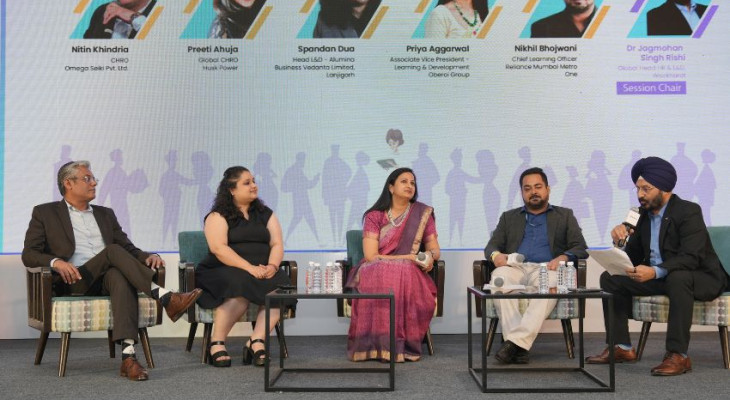
The session, chaired by Nitin Khindria, CHRO, Omega Seiki, alongside Dr Jagmohan Singh Rishi, Global Head HR & L&D, Wockhardt, brought together Preeti Ahuja, Global CHRO, Husk Power; Spandan Dua, Head L&D, Alumina Business, Vedanta, Lanjigarh; Priya Aggarwal, Associate Vice President L&D, Oberoi Group; and Nikhil Bhojwani, Chief Learning Officer, Reliance Mumbai Metro One.
Opening the debate, Khindria questioned whether organisations are building capability or merely delivering certifications, urging leaders to shift focus from programme volumes to measurable impact.
The discussion expanded to workforce transformation, with leaders observing that gig and contract talent now form a significant proportion of enterprise manpower. They argued that learner-centricity must extend beyond permanent payroll employees to include every contributor influencing business outcomes.
Panellists stressed the need for workforce segmentation. In industries where large sections of manpower operate on contractual or project-based models, upskilling cannot remain limited to core staff. Capability frameworks, they said, must align with role criticality, customer expectations and technological shifts.
Leaders from manufacturing and infrastructure backgrounds noted that even continuous-process sectors are embracing flexible manpower structures, requiring workers to adapt to cyclical demand, compliance changes and cross-functional mobility.
The panel also discussed moonlighting and portfolio careers, highlighting a shift from job security to skill security. Organisations, they said, must adopt mature guardrails while recognising evolving employee aspirations.
Collaboration and communication emerged as central themes. Speakers agreed that business leaders must define capability needs, HR must design adaptive learning systems, managers must reinforce behavioural change and employees must own their development journeys.
Concluding the session, Khindria emphasised that the future of L&D will be judged not by the number of programmes delivered but by the number of business problems solved. In a fluid workforce landscape, inclusive and outcome-driven learning ecosystems are becoming a strategic imperative.