
Nagaland over-saturated with govt jobs: Patton

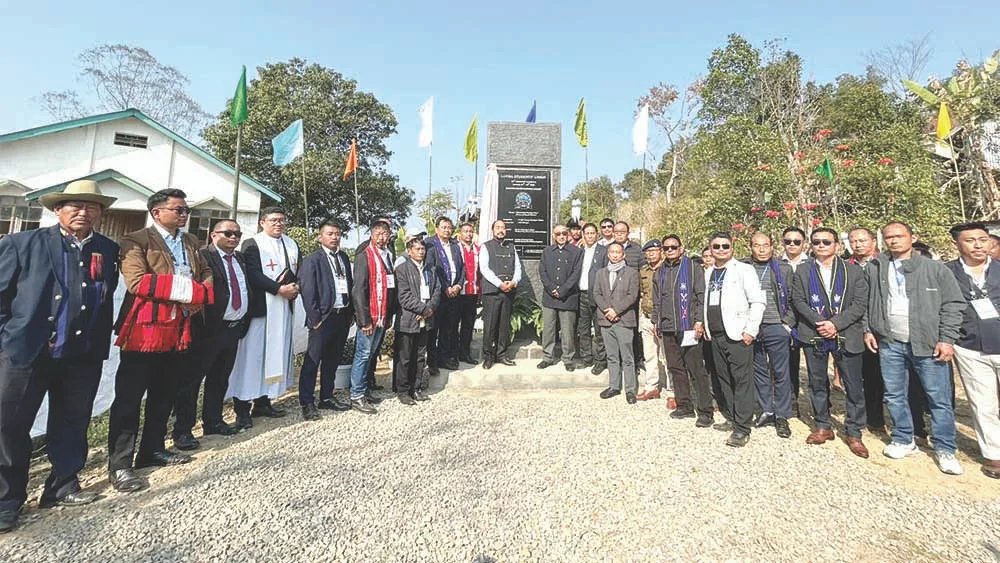

Deputy chief minister Y. Patton on Thursday cautioned that Nagaland is “over-saturated” with government employment and urged students and youth to reduce dependence on government jobs by embracing hard work, skill development, cultural identity, and the dignity of labour for a sustainable future.
Patton was speaking as the special guest at the inaugural programme of the 53rd general conference of Lotha Students’ Union (LSU) at Old Changsu village, hosted by Englan range students under the theme “Transcend Beyond Borders.” Expressing concern over prevailing attitudes, he noted that many youths avoid manual or skill-based work after Class 10, preferring to remain idle while demanding the deportation of illegal immigrants. “We talk about deportation, yet we ourselves refuse to work with dignity,” he remarked.
Highlighting language and identity issues, Patton urged parents and communities to ensure children learn and speak their mother tongue and cautioned against excessive use of foreign languages. Citing southern states where legislative proceedings are conducted in local languages despite high literacy, he stressed cultural preservation through traditional songs, dances, and attire. Recalling a folk song he had sung years ago in Akok village, he said it remains recorded as a symbol of originality.
Raising concerns about education, Patton revealed that 11 schools in Wokha district face closure due to low enrolment, with some schools having more teachers than students. He appealed to teachers to serve sincerely and warned that the government would act against employees drawing salaries without service. “Gone are the days of backdoor appointments. Recruitment, including police recruitment, will be transparent and fear-free,” he asserted.
Sharing employment data, he said Nagaland has about 1.31 lakh government employees for a population of nearly 19 lakh—far higher than Mizoram, Meghalaya, and Manipur. He advised students to focus on central services and competitive exams rather than political patronage. Highlighting past industrial failures due to lack of local labour, he reiterated the need for skill training and self-reliance. “Do not study merely to obtain certificates. Education must translate into skills,” he said.
Patton also updated that the Merapani–Wokha road project is at the ministry level and urged landowners and stakeholders to cooperate on land acquisition. Referring to Article 371(A), he noted that while resources belong to the people, development requires consensus. Reflecting on his student days, he recalled walking for days from Kohima to Wokha and carrying vegetables to support his education. “If we work honestly and sincerely, God will bless us,” he said.
Theme speaker Prof. Athungo Ovung of Nagaland University stressed redefining education beyond degrees and government jobs, emphasizing skills, emotional intelligence, and adaptability. He warned that nearly 75,000 job seekers in 2025 compete for just 600–700 government posts annually, with 92% of graduates unskilled. He called for a self-reliant society and participation in emerging sectors such as tourism.
Lotha Hoho chairman Er. Mhondamo Ovung echoed the call for hard work, skill development, and preservation of Naga identity, urging students to uphold their roots and speak their mother tongue with pride.
The programme featured cultural presentations by Akuk Students’ Union and Khen Voices United and concluded with a vote of thanks by Nyanthung M. Khuvung and benediction by Rev. Y. Chumben Patton.