Snabbit, Urban Company women work in fear


Barsha is among the growing number of women navigating Bengaluru’s quick service provider aka gig economy. Like thousands, these women are drawn by the big startup founders, brand publicity, flexible working hours and better pay. But they often shoulder the risks of unsafe commutes, isolated worksites, rude customer behaviour, and sexual harassment. While Swiggy, Zomato and other quick delivery workers protest publicly over wages and incentives, the everyday safety risks faced by women in home-service gigs rarely surface.
India’s gig economy is expanding rapidly with women forming 28 per cent of the workforce. Not being formal employees, the women are not even protected under the POSH act.
Safeguards around this expanding workforce largely kick in only after something goes wrong. Platforms say they offer SOS buttons, helplines and the option to block customers, but these systems depend on workers filing complaints. Many women go to the unions but rarely to the HR due to fear of job loss, retaliation and social shaming. The result is a glaring gap: while companies have response mechanisms after incidents are reported, there are few preventive safety checks before work is assigned.
“Male gig workers fight the companies. For women in quick service jobs, the fight is twofold — against the platform and at the workplace,” Gunjan, a member of the Gig & Platform Workers Union (GIPSWU), said.
It was around 5.30 pm on a regular Sunday when Barsha, typically working in the HSR layout, received what was supposed to be her final booking of the day.
The app displayed a location and flat number. It did not specify whether the customer lived alone or with family, something workers say they often only discover after reaching the house.
“Most times when there is a booking from youngsters, they go to their rooms, while we clean the house,” she said. “But this time, it was different.”
Barsha rushed to her last assignment as her shift was about to end. A man in his thirties opened the door.
Barsha began working — dusting shelves, washing utensils, and wiping surfaces. As she bent down to sweep the floor, the man suddenly grabbed her from behind.
“I froze,” she said. “I didn’t know what to do.”
Barsha pushed him and ran out of the apartment.
Instead of the company helpline, the first person she called was her friend Mishti who calmed her down. A month later, Barsha is still traumatised.
“I am scared to work at a bachelor’s house now,” she said in a shaky voice.
Like Barsha, Mishti learned how quickly unpredictable a booking can go. She remembers the day clearly.
The 21-year-old Snabbit worker had reached an apartment on a Sunday afternoon for what appeared to be a routine cleaning booking.
It was her second or third assignment of the day. The Snabbit app had pinged with the address and flat number, but like most bookings, it revealed little about the person inside the house. A tall man opened the door.
“I asked him what work he wanted done,” Mishti recalled.
Instead of pointing to a sink full of dishes or a dusty room, the man told her she did not need to clean.
“He said, ‘You don’t have to do any household chores,’” she said.
Confused, Mishti kept asking, “Kya kaam hai aapko?” She assumed perhaps the job details had not been entered properly on the app.
But when she tried to leave, the man stopped her.
“He said he wanted a personal favour,” she said. Then he asked if she could give him a massage.
Mishti told him to book a massage service through another platform that offers these services – like Urban Company – instead. The man insisted, offering to pay her directly. When she refused again, he asked her to fold some clothes lying on the bed.
As she stepped into the room, he allegedly grabbed her.
“He groped me and pushed me onto the bed,” she said.
Mishti kicked him and ran out of the house.
“I just wanted to save myself,” she said. “I ran for my life.”
For women working in metro cities across India, instant home-service economy, entering strangers’ homes alone has become part of the job — and with it, the constant calculation of risk.
Unlike traditional domestic workers who may simply leave an employer’s house, women working through apps say their only immediate recourse is to inform the platform, whose default response is to block the users. Police complaints are rare.
A 2018 survey conducted among 291 domestic workers across Gurugram, Faridabad and South Delhi by the Martha Farrell Foundation in collaboration with PRIA, found that over 29 per cent reported experiencing sexual harassment at work, while more than 65 per cent said they had faced stalking or intimidation.
Mishti informed the company about the incident and the customer was blocked.
“But is that enough?” she asked, pointing towards a three-storey building nearby. “The man still lives here.”
After escaping the apartment that day, Mishti rushed to a spot that she knew was safe and where she would be heard. It was an informal gathering point in a park where other quick service providers waited between bookings — a place where workers swap stories and share food. They understood her. They had all experienced that fear.
Several of the women pressed the SOS button on the app that day, Mishti said.
“More than 15 of us tried calling the helpline,” she claimed. When the call was finally answered, she said a man was on the line.
“I lost my mind,” she said. “They kept asking again and again what happened, how he touched me. I couldn’t even understand how to answer.”
Snabbit told ThePrint that its helpline is staffed by trained personnel and that only female employees handle SOS calls related to women workers. But this call was received by a man. The company also said retired Army officials form part of its trust and safety team and are deployed at the helpline centres for assisting women workers. Despite the complaint to the company, no police report was filed.
Nearly three months later, Mishti continues to work in the same neighbourhood. She still passes the same building.
“If I see him, I take another route, even if it’s longer,” she said.
According to her, the man has occasionally stopped his car and stared at her while she waited with others between bookings.
“Once I asked him directly: what is wrong with you, why do you keep staring at me?” she said. These incidents are now routine.
Neither Mishti nor Barsha told their families about the harassment. Both feared that if their families knew, they might be forced to quit the job entirely.
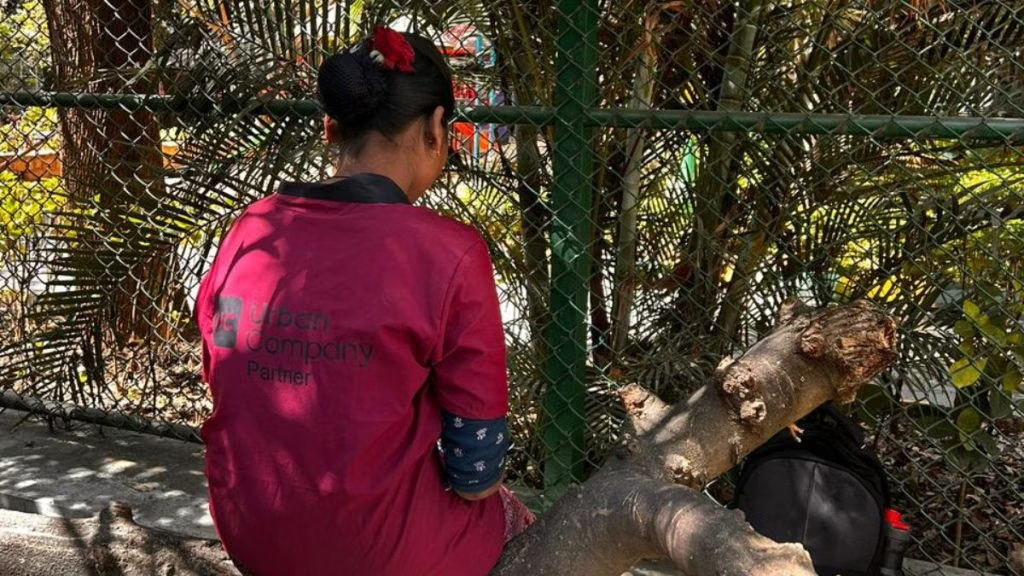
Mishti was just 13 when she left her village in Odisha’s Keonjhar district and travelled to Bengaluru in search of work.
Like thousands of young migrant women arriving in the city each year, she found employment in the garment industry. Bengaluru’s vast network of garment factories, stitching units and export houses depends heavily on migrant labour from states such as Bihar, Uttar Pradesh, Odisha, West Bengal and Jharkhand. The work was relentless but she stayed.
Mishti was the main earner in her family. After her sister’s marriage, the family had taken loans for the wedding. Repaying that debt — along with supporting her parents — became her responsibility. So when recruitment agents for home-service platforms began approaching women in the area, the offer sounded promising.
Compared with factory shifts, the work appeared more flexible. Workers could log into an app, accept assignments and move between homes instead of being tied to a single production line for hours.
For many women, that promise of flexibility — the idea that they could earn while managing family responsibilities — made the shift to gig work appealing. Yet the reality is more complicated.
Women who work independently as domestic workers often choose their employers and can refuse work if they feel uncomfortable. Platform workers, on the contrary, receive bookings through an app and say rejecting assignments can affect their earnings or future work.
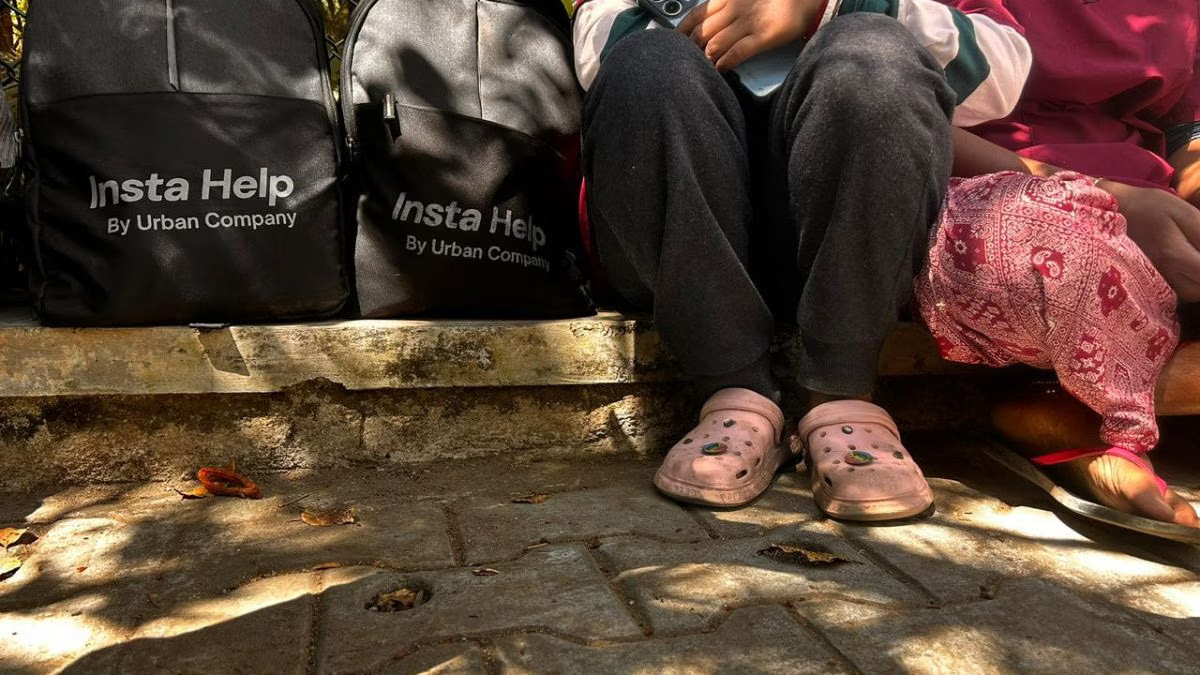
Sagrika, a migrant worker from West Bengal who has been working with Urban Company’s Insta Help — their quick service arm — for the past few months, said the biggest attraction of platform work was the ability to avoid being tied to a single employer.
“There is freedom,” Sagrika, who previously worked as a full-time domestic worker, said. “People are the same everywhere — they can behave rudely anywhere. But at least I had the option to leave and never come back.”
But discrimination follows her here too.
“Some customers don’t let us use their bathroom,” she said. “They tell us not to touch the glass with our lips if we drink water.”
For many migrant women, gig work appears very different from factory labour. Factories operate on rigid shifts, with supervisors monitoring productivity on the shop floor. App-based work, in contrast, is marketed as flexible — workers log in, accept bookings and move between homes, creating the perception that they can control their time and balance paid work with responsibilities at home.
Barsha’s journey to the gig economy followed a similar path.
She boarded a train from her village in Jashipur, Odisha, to Bengaluru, where many women from her village had already found work in the textile industry. Her sister and brother-in-law were employed in a garment factory as well.
Barsha joined them on the factory floor. But the job did not last long. When she fell ill and returned home for treatment, the company quickly replaced her. By the time she came back to Bengaluru, the position was gone.
With her parents’ livelihood and her siblings’ education depending on her earnings, Barsha needed work urgently. That is when she came across Snabbit.
The company promised earnings of up to Rs 50,000 a month for long shifts, with four days off each month — far more than what she had earned in the garment factory. For Barsha, it felt like a second chance to support her family.
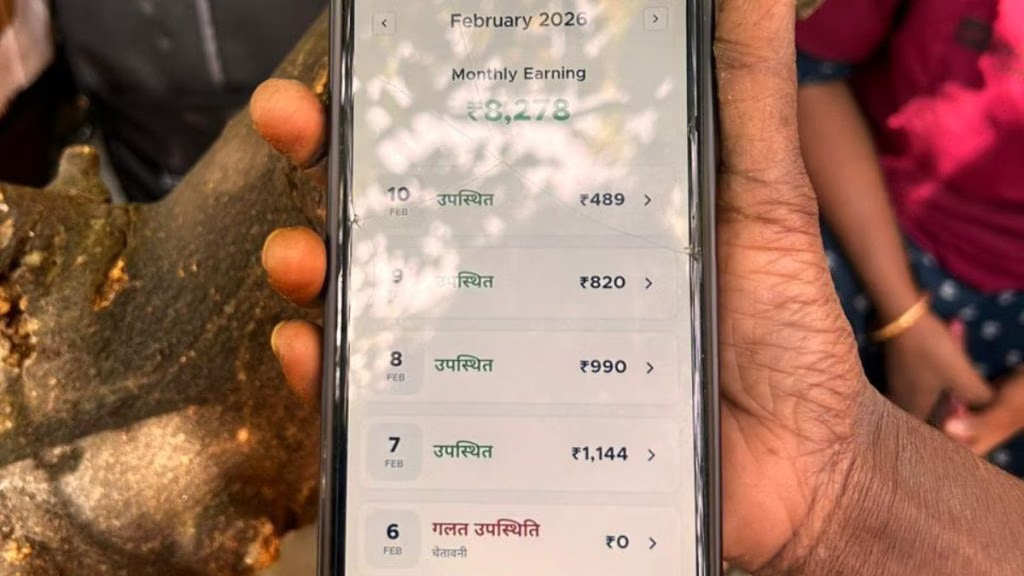
It looked too rosy back then. Safety risk is something they hadn’t factored in at that time. Soon they realised, there are other problems too.
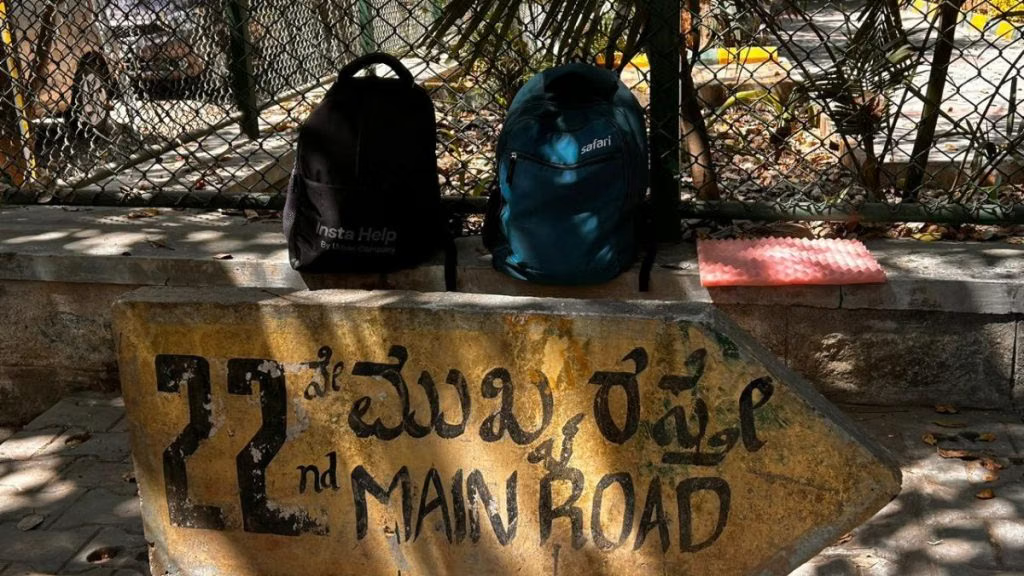
For many women working on platforms like Snabbit or Urban Company, roadside corners and neighbourhood parks have become unofficial waiting areas. The companies do not provide designated spaces for workers to rest between bookings, ThePrint has found.
Instead, workers move from one public spot to another while waiting for the next job.
At 1 pm on a Monday, Rani briskly walks to one of the spots in a park where her friends and colleagues gather between assignments. She washes her hands with water from a bottle, opens her lunch box, and begins eating quickly.
“If I don’t eat now, I won’t get time later,” she said.
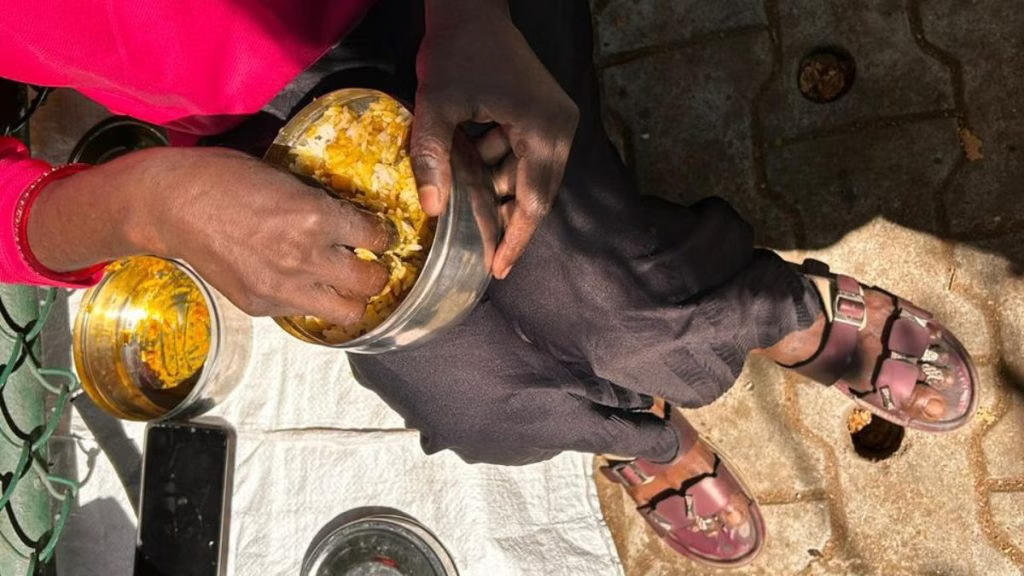
Bookings often appear one after another. Within minutes she finishes her meal and checks the app again.
Other workers say the pressure to keep accepting bookings often leaves little time to rest.
“She was crying yesterday,” one worker said. “She didn’t get time to eat the whole day.”
The women show a WhatsApp group where they share updates about bookings and schedules. Some voice notes are blunt.
“I’m hungry,” one says. “I haven’t eaten yet.”
Barsha and Mishti say they often return home in the evening and eat their first proper meal of the day.
“We fall sick sometimes,” Mishti said. “The doctor told us we need rest.”
Platforms, however, say workers get enough breaks between assignments. Snabbit CEO Aayush Agarwal says lunch breaks are factored in before jobs even begin.
“If you look at the numbers, especially in NCR, utilisation is only about 30 per cent,” he said. “That means experts are available and not working for nearly 70 per cent of the time.”
According to him, if workers were spending most of their time continuously on jobs, the system cannot sustain.
“If only 60 per cent of our available time is being used for work, that suggests there is room for breaks. Otherwise, we simply wouldn’t be able to function.”
He added that while the company is growing fast, an internal assessment has found that instances of workers not getting time for meals are “extremely low”.
Working through an app, several women said, initially felt more dignified. But the reality has often proved more complicated.
Ruchi Jha learned that within a day of joining Snabbit, thousands of kilometres away from Bengaluru, in Delhi.
Ruchi had signed up hoping the work would help her support her family. But during her first assignment in Greater Noida, she said she was instructed to wait in a park near Gaur City for bookings.
“I stood there in the uniform,” she said. “Several men came, stared at me, passed comments and left.”
The experience left her shaken.
“I felt my self-respect was gone,” she said.
Ruchi quit the job the same day.
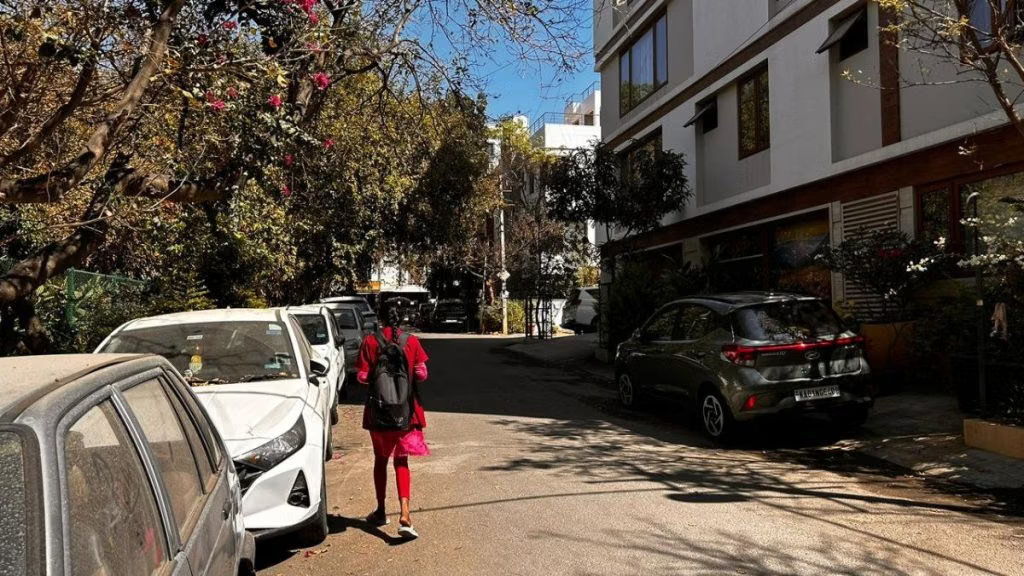
The safety concerns raised by Snabbit workers are not limited to a single platform. Women working with other home-service companies say they face similar risks.
Union representatives say several complaints have surfaced over the years involving workers from Urban Company, particularly among beauticians and massage therapists.
GIPSWU’s Gunjan recalled an incident from 2021 that involved a massage therapist working through the platform.
“A woman had booked a massage service, but when the service partner arrived, the customer left her alone in a house with four men,” she recalled.
The worker later confided in the union but asked that the matter remain confidential.
“She was terrified that if her family found out, she would never be allowed to work again,” Gunjan said.
Another worker, Rai — a masseuse who has worked with Urban Company for five years — described an incident from 2020 that left her shaken. She arrived at a booking expecting a woman client but found a man instead.
“I did not report the incident. Most times when women report such incidents, they are character assassinated,” she said.
Experiences like these have made some workers increasingly cautious about accepting certain assignments.
“We have become more sceptical about massage bookings,” Gunjan said. “But these customers still find their ways.”
Safety measures also differ between platforms. Workers on Urban Company are issued black backpacks containing tools and a basic safety kit that includes pepper spray. Many Snabbit workers, by contrast, say they typically carry only personal handbags or lunch bags while travelling between jobs.
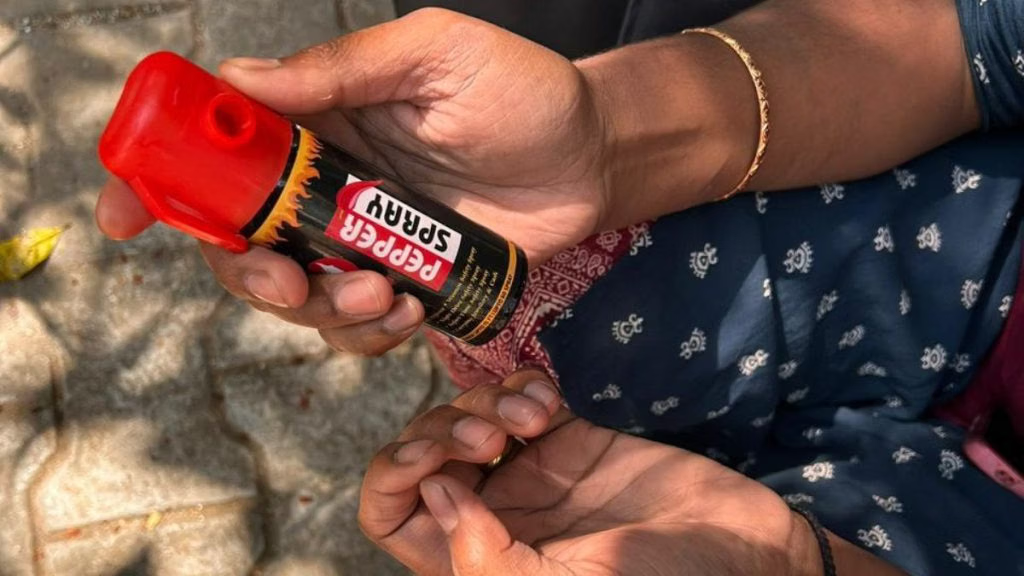
Union leaders argue that these measures, or the lack thereof, place the burden of safety squarely on women.
“The advice women are given is either to stay away from certain houses or avoid walking on the road,” Nirmal Gorana, national coordinator of GIPSWU, said.
The union says it received around 15 to 20 complaints last year from women gig workers involving harassment or abusive behaviour.
“These women will never come out and speak again. Most of them are not even aware of the POSH Act,” he added.
Urban Company, like Snabbit, also said worker safety remains a priority for them. They, too, have a ‘trust and safety’ team, comprising army veterans, that reviews complaints and takes appropriate action when required.
According to the company, service professionals also undergo mandatory onboarding sessions that include safety protocols and guidance on handling difficult situations with customers. Workers also have access to a 24-hour partner helpline, a women-only safety helpline and an SOS button within the partner app.
But labour unions say more systemic safeguards are needed.
GIPSWU has written to the labour ministry urging the government to introduce awareness programmes and stronger grievance systems for women gig workers.
“There should be internal committees and a clear mechanism where women workers know complaints will be taken seriously,” GIPSWU’s Gorana said. “There should also be a toll-free number that they can access easily.”
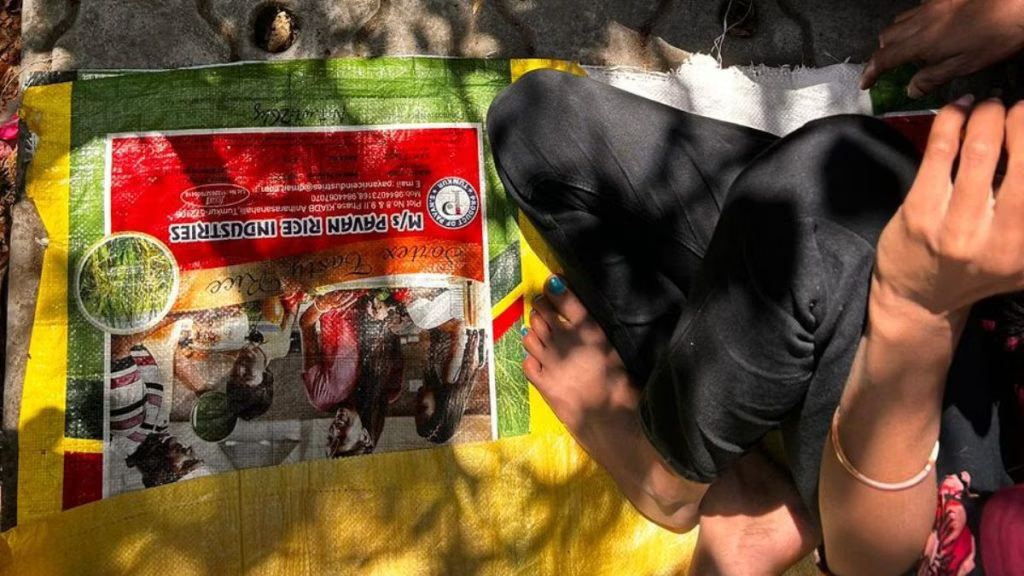
Barsha’s experience changed how many workers approach their jobs. They rarely speak about the harassment openly but it altered their daily routines.
Some husbands now drop their wives at waiting spots before work. Others share live locations with family members before entering a customer’s home.
Barsha and Mishti now follow their own rule — if possible, they try to find out whether a booking is from a bachelor or a family. Even then refusing a job is difficult and there is no training on how to deal with emergencies.
But companies say worker safety is a priority.
Snabbit CEO Aayush Agarwal said the company operates a dedicated SOS system and trust-and-safety teams across cities.
“When an SOS is triggered, teams on the ground are alerted immediately,” he said. “Our first advice is to move to a safe space. We can reach them under 10 minutes.”
He added that the company is planning to introduce new technology to strengthen monitoring. Snabbit says it has blocked around 200 customers so far related to safety incidents.
“Customer safety is at the core of how we operate. There hasn’t been a single case that we haven’t handled professionally and thoroughly,” Aayush said.
But workers are not happy.
“With their new technology, it will get more difficult to contact the platform,” GIPSWU’s Gunjan said.
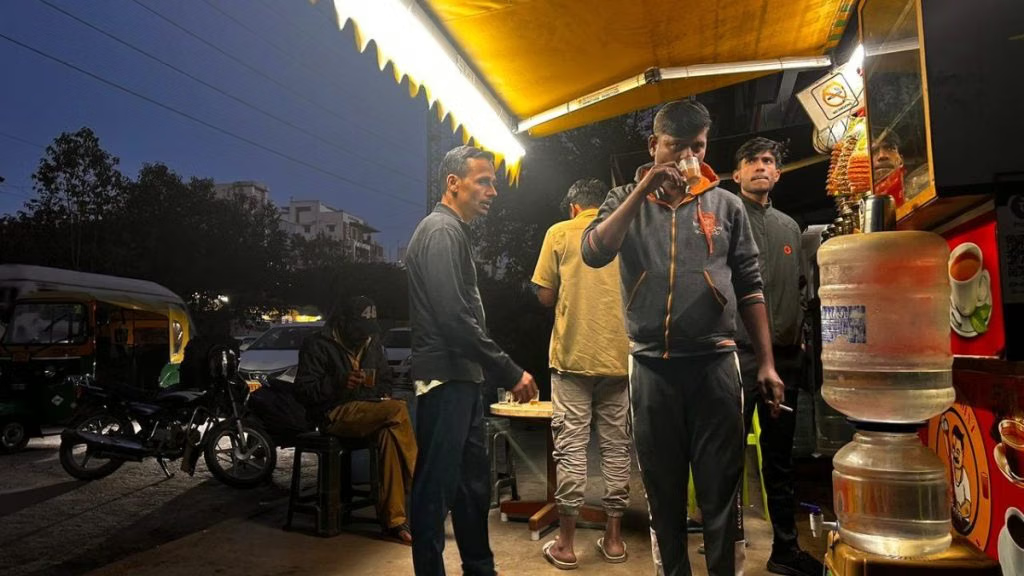
Before sunrise in Bengaluru’s BTM Layout, Barsha often waits at a small roadside tea stall.
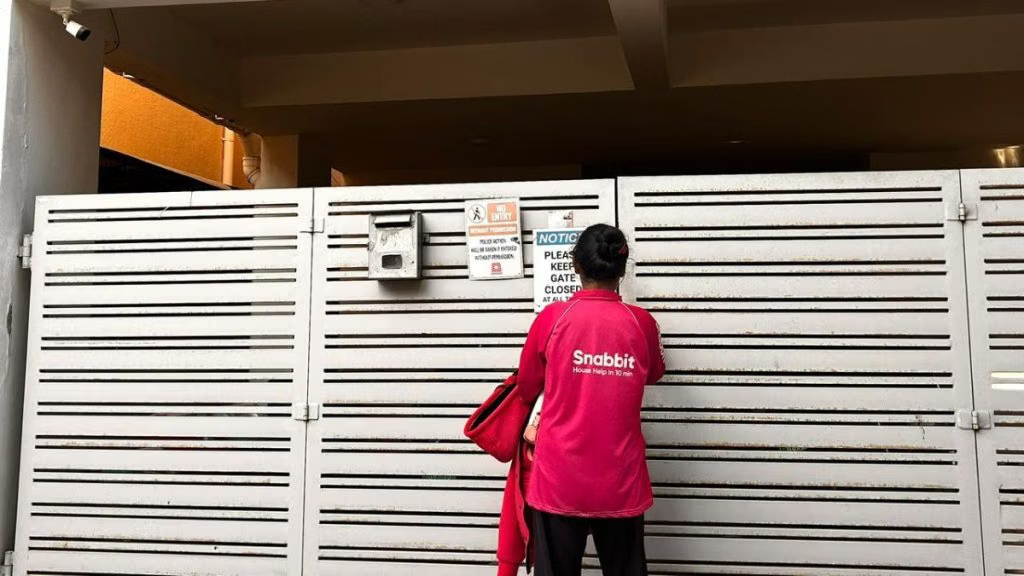
Dressed in black trousers and a pink Snabbit t-shirt, she places a small red three-legged stool beside the stall, orders a cup of tea and opens the app on her phone, waiting for work.
Around her, men stop by for cigarettes and tea. Barsha sits quietly, refreshing the screen until the first assignment appears.
“The chaiwala is like our brother,” she said. “He gives us tea sometimes and keeps an eye out for us.”
For the workers, these park corners and tea stalls are like offices. They arrive at the spots between assignments to rest, eat, or call family members. But even they are fragile.
One morning, the workers were waiting at the Independence Park in HSR layout — in between assignments or for meals. It’s small green space in an upscale locality, surrounded by luxury bungalows. For the women, it was a relatively safer space to wait during the early hours of the morning but soon, the spot was snatched.
“We used to sit on the other side earlier,” Sagrika said as people passed her on morning walks. “Residents complained and we were forced to move.”
(Edited by Stela Dey)