
Vocational teachers want private agencies out of their jobs

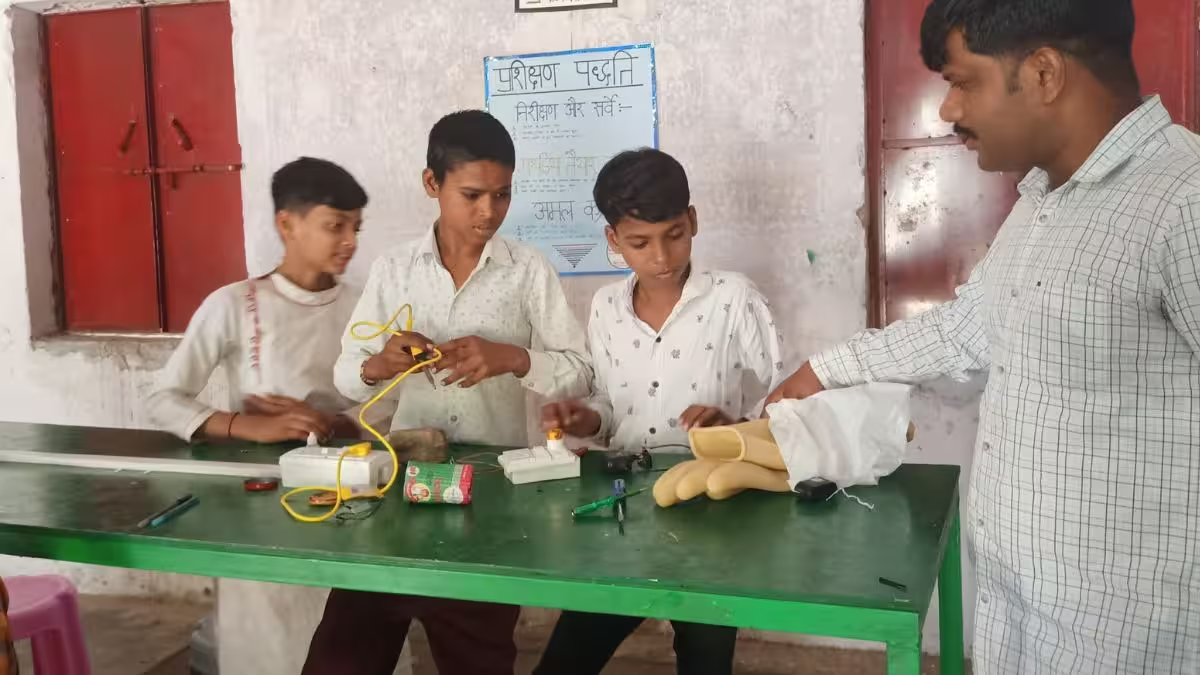

Vocational Courses in Assam Government Schools: Pradeep Gogoi* teaches information technology to Classes 9 and 10 at a government high school in Kamrup district of Assam. Designated a “vocational trainer”, he works full-time but is also asked to handle numerous other responsibilities by the school. But the Assam Government is not his employer; a private third-party agency is.
Live Updates | CBSE Admit Cards 2026
“We are working for a central government scheme, but on paper we belong to a private company,” said a vocational trainer. “That one difference changes everything about how we live.”
Since 2018, the trainers have been employed through private third-party agencies known as “training management partners” (TMP). Their salaries are funded through the Samagra Shiksha Abhiyan, a centrally-sponsored education scheme meant to strengthen school education across the country.
The trainers don’t enjoy any of the benefits regular government employees get – attendance norms are more stringent, days of leave are fewer, salaries are much lower and often delayed by months.
Caught between their private employers and the demands of the government schools they actually serve, the trainers feel unheard and exploited. Getting organised in 2026, they now ask that the private agencies be removed from the process and they be appointed directly by the government.
For many trainers, salary delays are not an exception but routine. Payments often arrive three to four months late; initially, the wait stretched to six months. During this period, trainers continue teaching without any assurance of when they will be paid.
“There are months when I have to borrow money from friends just to manage food and travel,” said another trainer. “We are told every time that the money has not been released by Samagra Shiksha, so they cannot pay us.”
Most trainers receive around Rs 23,000 per month after deductions, though many say they were never clearly informed of their exact salary structure. Provident fund and other deductions are made, but proper explanations or timely salary slips are rarely provided, they allege.
“We still don’t know what our actual salary is,” one trainer said. “The amount changes after deductions, and nobody explains how it is calculated.”
Trainers are required to be present in school from early morning till 3pm. Because of these fixed hours, they cannot take up any other job to support themselves during periods of delayed payment.
“We stay in school from 8 in the morning till evening, so doing any other work is impossible,” a trainer said. “But when salaries are delayed, we are expected to survive somehow.”
Unlike regular government teachers, contact vocational trainers are asked to report to school to mark attendance even during vacations. In some cases, failure to comply has resulted in salary deductions, as the trainer is marked absent. “During the summer vacation, I came to school just to mark attendance,” one trainer said. “Still, my salary was cut by thousands of rupees.”
Attendance is marked daily through a mobile application that employs geofencing technology, activating the attendance feature only once the teacher is within 200 meters of the school. This is when the Assam government already uses the Shiksha Setu app to register attendance.
However, the private app is not the only form of monitoring by the third-party contractor to confirm their presence in school.
“Even after marking attendance, we get video calls asking if we are in class,” said an IT trainer who requested anonymity. They train in another school in the same district. “It feels like harassment, but we stay quiet because we are afraid of losing our jobs.”
A delay of even five minutes can result in an absence being marked, while leaving school before the designated time leads to salary deductions. When there are no classes, trainers are assigned non-teaching duties and are required to remain on campus.
The vocational trainers are also responsible for arranging guest lectures by industry professionals, inviting them from companies like Amazon or Flipkart, to speak for a fee or honorarium. Like their own salaries, honoraria are often delayed or partially released.
“When two guest lecturers come on the same day, many times only one is paid and the other payment is kept pending,” a trainer said. “We have to manage the situation.”
Trainers say they frequently pay for travel and refreshments for guest lecturers from their own pockets. Over the course of a year, this expense can add up to thousands of rupees.
“I spend between Rs 500 and Rs 1,000 every month from my own salary,” one trainer said. “The reimbursement comes much later, sometimes after several months, and sometimes not in full.”
Leave policies are another major concern. Trainers are allowed limited medical leave, and taking more than the permitted days results in salary cuts. Unlike in the full-fledged government job, there is no formal maternity leave policy.
“There are trainers who become pregnant, but they don’t get proper leave,” one trainer said. “They either lose pay or fear losing their job.”
Also read Education Budget 2026: OBC, ST scholarships get Rs 1,000 crore boost, minority scheme funds slashed
Despite years of service, vocational education trainers remain contractual workers with no job security. Some trainers who qualified through government recruitment exams have moved on to permanent teaching positions with higher salaries and benefits.
“Those who got government jobs earn much more and have stability,” a trainer said. “We are doing the same work, but our future is uncertain.”
A senior official associated with the Samagra Shiksha Abhiyan and who wishes to remain anonymous said that vocational trainers are not permanent teachers and are employed through third-party agencies. According to the official, salaries depend on the release of funds under the scheme, and delays may occur.
“However, it is unusual for such delays to be recurrent, and I will look into the matter if complaints are received from trainers,” they said.
For trainers working in classrooms every day, however, these assurances offer little comfort.
“We are not asking for special treatment,” said another trainer. “We are only asking to be paid on time and treated with dignity.”