
Women at work – The Statesman

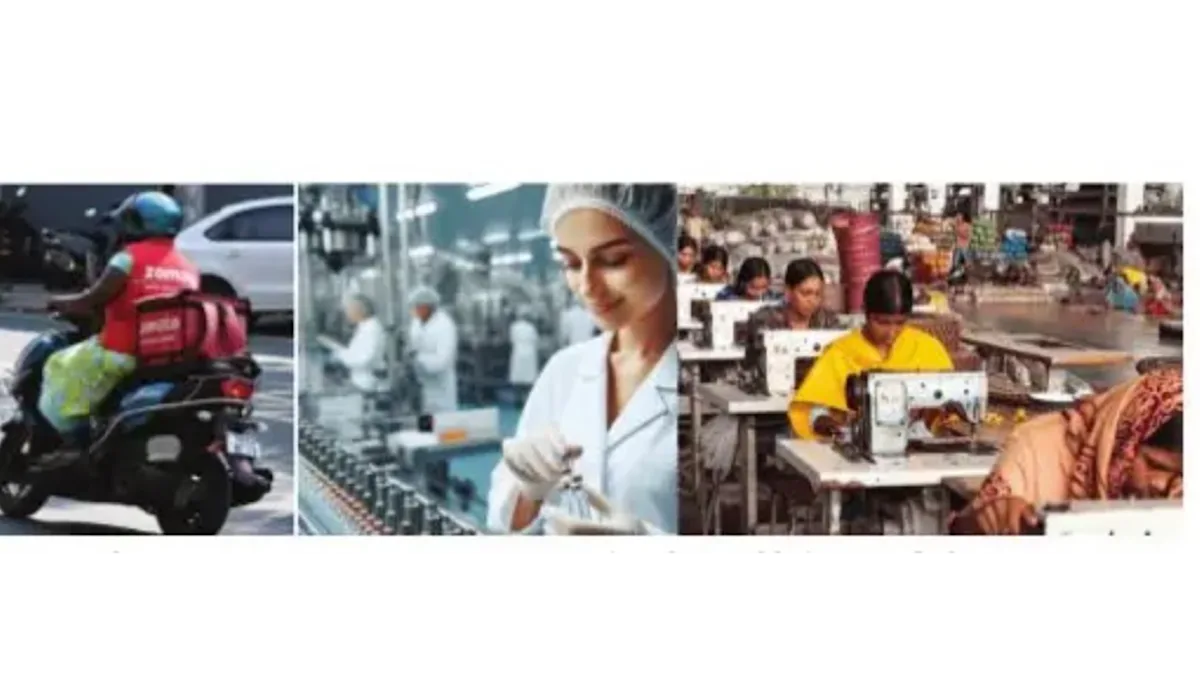

Amid growing global economic uncertainty, the implementation of India’s new labour codes presents a critical opportunity to strengthen domestic resilience and advance inclusive growth. As the world’s fourth-largest economy, India stands at a juncture where realising the vision of Atmanirbhar Bharat will depend not only on expanding manufacturing or technological capacity but also on building inclusive and resilient institutions. True self-reliance lies in creating an economy where every citizen, particularly women, can participate meaningfully in the growth story. India has made notable strides in this direction.
According to the Periodic Labour Force Survey (PLFS) 2023-24, the Worker Population Ratio (WPR) for women aged 15 and above has increased from 22.0 per cent in 2017-18 to 40.3 per cent, while the Labour Force Participation Rate (LFPR) has climbed from 23.3 to 41.7 per cent over the same period. These figures mark a significant narrowing of the gender gap in labour market participation and signal a shift towards greater economic inclusion. Yet, a substantial share of women remains excluded from the workforce, and many of those employed continue to be concentrated in the informal sector, facing low wages, limited job security, and minimal access to social protection. From agriculture and domestic work, to home-based enterprises and gig platforms, informal employment often reinforces economic vulnerability and inequality. The recent codification of India’s labour laws into four comprehensive codes offers a unique opportunity to address these gaps.
Advertisement
By focusing on formalisation, protection, and equal access, these reforms aim to lay the foundation for a more inclusive and resilient labour market. India is not alone in this pursuit. Several developing countries including Vietnam, Indonesia, Egypt, and Mexico have undertaken significant labour law reforms to enhance women’s participation. These include expanding maternity benefits and allowing women to work night shifts under safeguards such as voluntary consent, safe transportation, adequate lighting, female supervision, and strong anti-harassment protections. Such measures are not just about enabling employment, they are about affirming women’s dignity, autonomy, and equal stake in economic progress.
As India continues on its journey toward self-reliance and sustainable development, placing women at the heart of policy and labour reform will be key to building a truly inclusive and equitable economy. Among the many provisions embedded in these codes, several hold particular significance for women’s economic participation and empowerment. These reforms aim to make workspaces safer, more flexible, and more equitable to ensure that women can participate in, and benefit from, the economy on equal terms with men. India’s labour reforms, particularly the Code on Wages (2019) and the Occupational Safety and Health (OSH) Code (2020), aim to tackle long-standing gender-based discrimination in both pay and working conditions, directly impacting women’s participation in the labour force.
The Code on Wages (2019) reinforces the principle of “equal pay for equal work” by explicitly prohibiting gender-based discrimination in recruitment and wages. Importantly, it universalizes minimum wage coverage across both organized and unorganized sectors. This provision is crucial for women in lower-paid, informal occupations, as it ensures they are guaranteed a basic level of income security. Furthermore, the introduction of a national floor wage framework strengthens women workers’ capacity to negotiate fair pay while also reducing regional disparities in wage levels. This is a critical step toward addressing the pervasive gender wage gap and enhancing income security for women across sectors. In parallel, the OSH Code (2020) opens new opportunities for women’s economic participation by allowing them to work beyond traditional working hours.
Previously restricted by the Factory Act of 1948, which prohibited women from working night shifts in factories and commercial establishments, the new code aims to level the playing field between men and women in terms of earning potential. The lifting of this restriction allows women to work in shifts traditionally dominated by men, thus increasing their ability to earn wages comparable to their male counterparts. For instance, states like Andhra Pradesh, Maharashtra, Gujarat, Karnataka, Punjab, Bihar, Goa, Himanchal Pradesh, Assam, Meghalaya, Tripura, Kerala, Madhya Pradesh, Odisha, Rajasthan, Tamil Nadu, Chhattisgarh, Jharkhand, Uttar Pradesh etc. have already lifted the night shift bans, resulting in an increase in female employment without negatively affecting male employment, particularly in larger, export-oriented firms. This suggests that the inclusion of women in night shifts could significantly expand opportunities for formal sector employment.
However, working during night hours presents unique challenges, especially concerning safety. Acknowledging this, the OSH Code ensures that women are only employed for night shifts with their consent and that adequate safeguards are in place. Employers are required to provide safe transport, separate toilets, and other safety mechanisms, including measures to prevent sexual harassment. This shift represents a move away from the traditional, paternalistic approach that restricted women’s work hours under the guise of protection. Instead, it empowers women by offering them choice and autonomy within a framework that prioritizes their safety and dignity. Another key factor that impacts women’s ability to work in the labour market is the double burden of work they face, having to balance both paid work, and domestic and child care responsibilities.
According to estimates by the International Labour Organisation in 2023, 748 million people (aged 15 or older), most of whom were women, were unable to participate in the global labour force because of care responsibilities. Additionally, there is a need for women-friendly infrastructure that addresses the differential gender-specific needs of women and men at the work place. The OSH Code establishes minimum standards for health, sanitation, restrooms, and creche facilities across sectors, addressing longstanding infrastructure gaps that have deterred women from employment, particularly in manufacturing, mining, and construction. In particular, the provision for mandatory creche facilities in establishments employing more than 50 workers, while not new, gains enforceability through codification.
This is a crucial step in supporting working mothers and normalizing shared caregiving responsibilities. Complementing these provisions, the Model Standing Orders for the service sector, issued under the Industrial Relations Code (2020), now permit work-from-home arrangements based on mutual agreement between employers and employees. This introduces a degree of flexibility that can further support women balancing paid work and caregiving responsibilities, particularly in service and knowledge-based occupations. Additionally, the OSH Code also mandates free annual health check-ups and places the onus on principal employers to ensure health and safety facilities for contract workers. These measures are significant for women employed in outsourced or casual roles where occupational health and welfare are neglected.
Similarly, the emphasis on providing safe transport, well-lit working environments, and hygienic facilities can improve women’s willingness and ability to work in night shifts or remote sites. Smaller enterprises, which may struggle to meet these requirements individually, could collaborate and pool resources to collectively provide the necessary infrastructure. But the cornerstone of India’s labour reforms is the Code on Social Security (2020), which seeks to extend social protection to all workers, particularly addressing the growing gig and informal sectors. This marks a major shift from earlier labour laws that primarily focused on formal sector employees, leaving out a vast majority of India’s workforce, especially women, who are employed in informal, casual, or self-employed roles. According to PLFS 2023-24, 61 per cent of women workers in non-agriculture sector are working in informal sector enterprises. Many women turn to the unorganised sector for its flexible hours, especially those balancing paid work with caregiving responsibilities. As a result, women are overwhelmingly concentrated in the informal sector, such as agriculture, domestic and care work, and micro or home-based enterprises where access to social protection remains limited.
Additionally, women are entering in large numbers in the fast-growing gig and platform economy, particularly in domestic, care and beauty services, where such benefits are rare. Social protection plays a pivotal role in improving women’s welfare by providing essential economic security. It reduces women’s vulnerability to financial shocks during periods of irregular employment or unemployment. For instance, maternity leave and health insurance ensure that women can care for themselves and their families without risking financial instability. Pensions offer long-term security, especially critical for women who often face lower lifetime earnings due to unequal pay, career breaks, and caregiving roles. In response to these challenges, the Code on Social Security (2020) introduces the recognition and registration of unorganised, home-based, self-employed, gig, and platform workers. By expanding the definition of “worker” to include these groups, the Code acknowledges the evolving nature of employment in India and aims to close long-standing gaps in social protection.
Moreover, the Code integrates the Maternity Benefit Act (1961) into its framework, expanding the definition of “family” to include dependent in-laws, recognizing the broader caregiving responsibilities many women shoulder. Complementing these provisions, the Ministry of Labour and Employment has already taken steps to create a national database of unorganised and migrant workers, which will enhance visibility of such workers and help extend social protection more effectively to women workers in the informal sector. One of the most significant steps proposed under the Code remains the inclusion of gig and platform workers for social protection. Previously classified as independent contractors, these workers fell outside the purview of most labour protections. The Code now recognises their economic contribution and mandates the creation of dedicated social security schemes for them. Crucially, it introduces a shared contribution model, where not only workers but also the platforms or aggregators that engage them are required to contribute. This makes the system more equitable and financially sustainable, particularly for gig workers whose incomes are often irregular or unpredictable. For women in the gig economy, this represents a meaningful step toward securing rights and benefits in an otherwise unregulated space.
Together, these provisions mark a critical step towards formalising women’s work and embedding gender-sensitive protection within India’s labour market architecture. Yet, their success will depend on effective implementation and adoption of women friendly provisions by the industry, the creation of accessible registration mechanisms, and sustained outreach to ensure that women in informal and digital workspaces can claim the rights now extended to them by law. The comprehensive labour codes present a transformative opportunity to reshape the country’s labour market into one that is more equitable, inclusive, and future-ready. However, legislative intent alone is not enough. Real change hinges on the timely, uniform, and effective implementation of labour codes across states.
This requires not just political will, but strong institutional mechanisms, inter-state coordination, a pro-active industry and robust monitoring on the ground. To achieve the vision of Atmanirbhar Bharat, we must also champion the rise of Atmanirbhar Women: empowered, self-reliant, and protected by a labour ecosystem that enables them to thrive. Whether on farms, factory floors, gig platforms, or in small enterprises, women must be recognised not merely as beneficiaries of growth, but as architects of it. Fully implementing the labour codes now is not only a matter of social justice, it is a strategic imperative
(The writer is President, Nagarathar Chamber of Commerce, Chennai, and State Vice President, Laghu Udyog Bharati, Tamil Nadu chapter)