Zomato, Zepto, Swiggy, Urban Company, Porter Challenge Karnataka Gig Workers Act


‘If there are different laws governing the same subject, it can increase the compliance burden on platforms. The process would be easier and more transparent if there were a singular national-level law.’
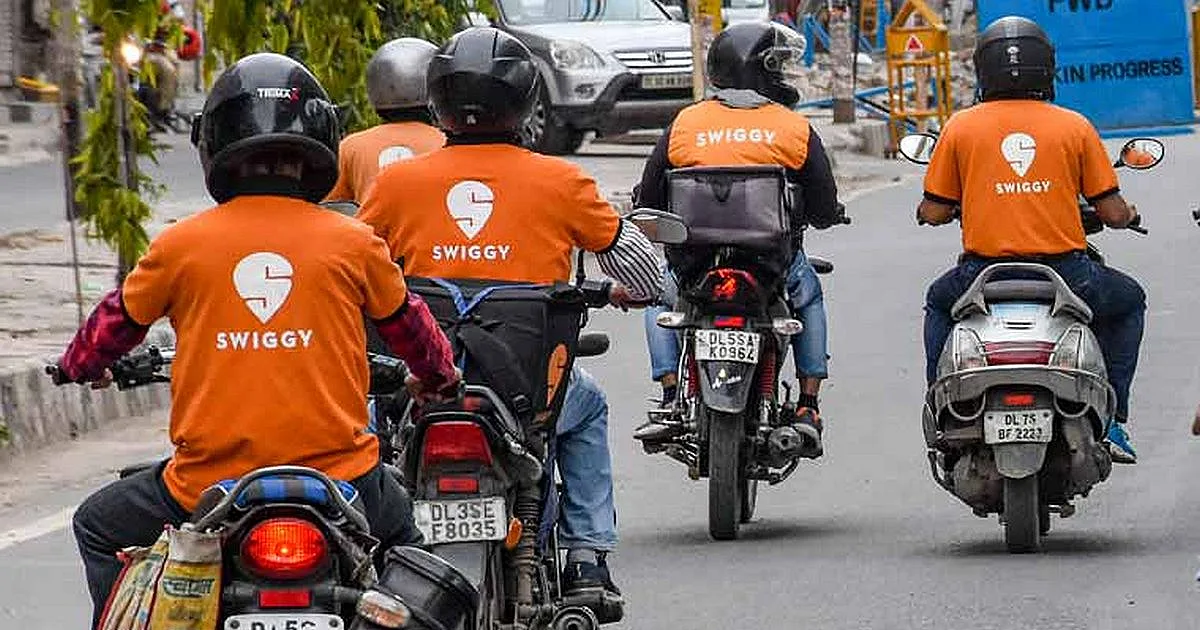
Kindly note the image has been published only for representational purposes. Photograph: PTI Photo/Rediff Archives
Platform aggregators such as Eternal (Zomato), Zepto, Swiggy, Urban Company, and Porter, along with the Internet and Mobile Association of India (IAMAI), have filed a writ petition before the Karnataka high court, challenging the Constitutional validity of the Karnataka Platform-based Gig Workers (Social Security and Welfare) Act, 2025.
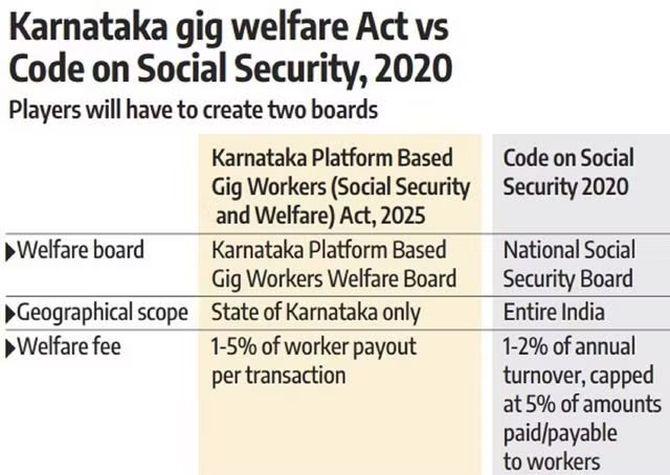
According to the petitioners, the state-level law imposes additional financial liabilities on aggregators and increases the compliance burden even though a nationwide framework — the Code on Social Security (CoSS), 2020 — is already in place.
In their writ petition, seen by Business Standard, the petitioners said that CoSS has adequate measures for the welfare of gig workers and establishes a uniform, centralised framework.
A source aware of the developments said the companies have approached the court as a group to ensure ease of doing business.
“If there are different laws governing the same subject, it can increase the compliance burden on platforms. The process would be easier and more transparent if there were a singular national-level law,” the source added.
Another person said that if there are separate legal requirements, aggregators will be forced to make contributions twice or more, while also balancing different compliance mechanisms.
The petitioners have also sought the quashing of multiple notices issued under the Karnataka Platform-based Gig Workers (Social Security and Welfare) Act.
These include a notice dated May 21, directing platform companies to constitute internal dispute resolution committees (IDRCs), and showcause notices dated June 16, warning of penal and coercive action for alleged non-compliance, failure to respond to communications relating to onboarding, failure to use software for welfare fee payments, and failure to furnish information sought by the authorities.
The companies have also challenged notices dated June 22, directing them to pay the platform-based gig workers’ welfare fee under Section 20 of the Act.
The notices require aggregators to deposit the welfare fee and furnish proof of payment along with prescribed returns by July 5.
Under Section 22 of the Act, aggregators are required to constitute IDRCs where gig workers can file grievances relating to payouts, deductions, and termination.
Also, under the Act, platform companies must pay a welfare fee of 1 to 5 per cent of the payout made to gig workers on every transaction.
However, the petitions observed that CoSS already establishes a comprehensive national framework for the social security and welfare of gig workers.
The petitioners contend that Parliament intended to occupy the entire legislative field through the code by providing a uniform statutory framework covering the identification of gig workers, welfare schemes, aggregator contributions, and their implementation.
The Karnataka Act, they argue, regulates the same subject matter by creating substantially similar and parallel mechanisms, while imposing additional financial liabilities on platforms and aggregators.
The move by aggregators has drawn criticism from gig workers’ organisations, which have opposed the challenge to the legislation.
The Indian Federation of App-based Transport Workers (IFAT), Telangana Gig and Platform Workers Union (TGPWU), and Karnataka App-based Workers Union have condemned the decision of aggregators to challenge the Act.
Calling it an “unfortunate attempt”, Shaik Salauddin, cofounder and national general secretary of IFAT and founder and president of TGPWU, said, “The companies argue that the law is inconsistent with existing central legislation. The companies are misrepresenting the intent and content of the law.”
“The Karnataka law only supplements and does not replace CoSS. The reality is that gig workers across India continue to remain without adequate social protection despite years of promises. States have both the Constitutional authority and moral responsibility to protect workers from exploitation and fill these gaps,” Salauddin added.
Feature Presentation: Aslam Hunani/Rediff