7 lakh jobs created, Rs 50 lakh-cr investments bagged, says UP CM. Oppn flags MoU-reality gap

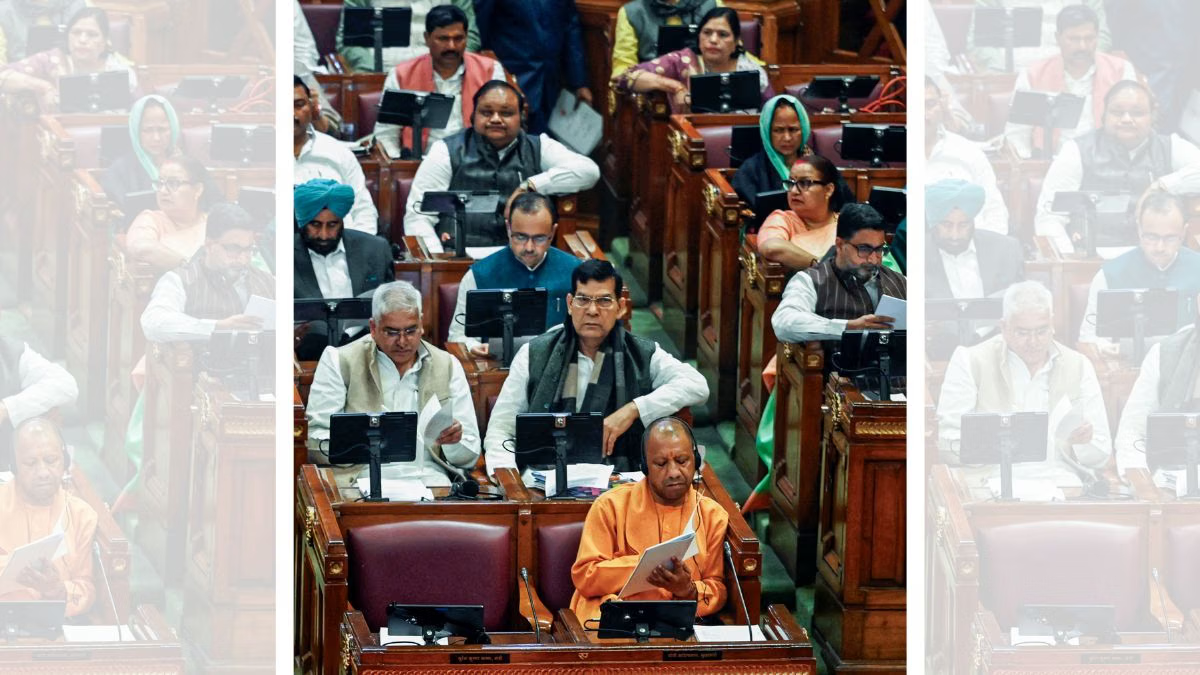

Lucknow: Uttar Pradesh created seven lakh direct and indirect employment opportunities in the past eight years, Chief Minister Yogi Adityanath said Thursday, adding that his government also received investment proposals worth Rs 50 lakh crore in the same period.
During a debate after the Governor’s address in the UP legislative assembly, Yogi Adityanath said, “We have received investment proposals worth more than Rs 50 lakh crore. Our MoUs are not limited to paperwork; they are being implemented on the ground through groundbreaking ceremonies. In the last eight years, we have provided seven lakh direct and indirect employment opportunities. Today, people of Uttar Pradesh are getting jobs within the state itself and are no longer preferring to move out for employment.”
The 2026 Budget session of the UP assembly is currently underway.
On Thursday, the Yogi government delivered an ‘Economic Survey’ report in the assembly, with the CM calling it a strong and open declaration of the government’s achievements.
Though the CM projected large-scale job creation, investment inflows, and poverty reduction, the Opposition alleged data manipulation and questioned the actual conversion of investment proposals into operational projects.
Congress Legislature Party leader Aradhana Mishra ‘Mona’ claimed that less than 10 percent of the investment proposals had materialised, alleging that the government was making false claims.
Before that, SP MLA Ragini Sonkar raised concerns over alleged discrepancies in the investment data, stating that only nine percent of the proposals had begun to take shape on the ground, according to UP Industrial Development Minister Nand Gopal Gupta Nandi’s written response to her query.
Whereas the government claimed MoUs worth Rs 40-50 lakh crore had been signed, projects worth only Rs 3.91 lakh crore were currently operational, she added, arguing that it meant only nine percent of the proposals had been implemented, and definitely, fewer jobs had, so far, been generated than what the government claimed.
Countering her allegations, Nandi said the Opposition leaders were misreading the data, adding that work on over 33 percent of the projects had already begun on the ground.
The CM, in his speech, claimed the ‘Economic Survey’ showed the government’s journey, from ideation to systems building and development, with transparency and accountability.
From being called a ‘bimaru (backward)’ state, Uttar Pradesh, he said, is now among the top three economies in India. The state, he added, had become “a growth engine” for India. He described UP as a symbol of “Triple T”, “technology, trust, and transformation”, entailing working together to bring overall development.
Moreover, the CM highlighted that over the last eight years, with the support of both the state and central governments, more than six crore people in UP had come out of multidimensional poverty. He called it a major achievement in inclusive development and social progress.
While discussing UP’s economic growth, the CM also said that the state’s old image of fear and lawlessness did not develop suddenly but was the result of the earlier political culture, where “daughters felt unsafe, and traders were forced to shut their shops”.
Stating that Leader of Opposition Mata Prasad Pandey’s remarks on UP’s problems, though practical, made it look like his “hands were tied”, the CM said that he would clearly explain from where the issues stemmed, alluding to other parties who had been in power in the past.
Signs of the old mindset were still visible in the UP assembly, even during voting, and no person in the state would accept such behaviour, the CM further said, while accusing the Opposition, especially the Samajwadi Party, of repeatedly hurting the dignity of the House through their conduct.
Quoting poet Mirza Ghalib, the CM also said, “Ghalib spent his whole life making one mistake—the dust was on his face, but he kept cleaning the mirror”, in a roundabout way of saying that blaming others cannot hide the mistakes of past governments.
(Edited by Madhurita Goswami)
Also Read: Meet Aishwarya Sengar, Unnao rape convict’s daughter & defender. ‘I’m a feminist’