
Talent burnout, job-hopping & skyrocketing salary hikes


In 2025, we invited US leaders from accounting and consulting firms. And they had nothing but positive things to say about their “India team”.
A National Practice Co-Leader said, “What I love about our global teams and especially the Indian team, is their passion and their excitement to learn and grow.”
Another National Practice Leader agreed and said,” Finding this level of expertise in the U.S. in such a short time, given the talent shortage, would have been incredibly difficult!”
In spite of Talent in India being good, several India Leaders had a bone to pick with their teams.
One leader, who requested anonymity, explains:
“In the U.S., most accounting firms operate with just five or six clearly defined titles, each with well-understood responsibilities: Staff → Supervisor → Manager → Director → Partner
In India, however, there are often three or four titles at the manager level alone: Associate Manager → Assistant Manager → Manager → Senior Manager
This is less about capability and more about appeasing egos.”
Everyone is racing to grab the next big title as quickly as possible. And yet? They often don’t fully understand what those roles actually involve.
Leaders openly admit that employees in U.S. CPA firms in India earn well.
Yet a growing number of professionals feel they are being taken advantage of.
One leader says, “A lot of employees come to us every year saying, ‘I’ve done my market research and I’m underpaid.’”
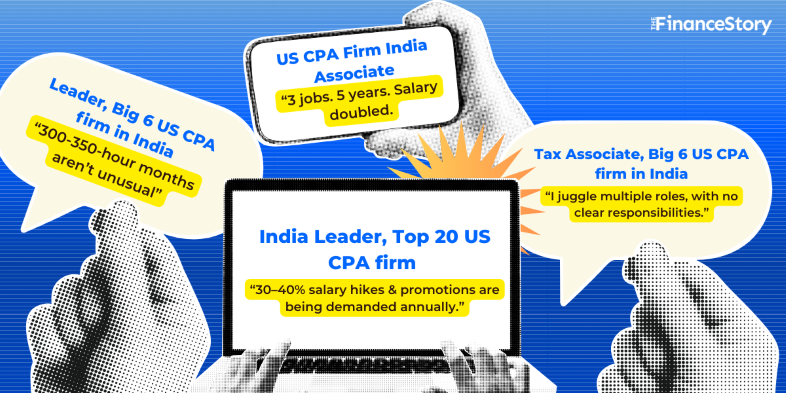
He continues, “They’re demanding 30–40% salary hikes and promotions every single year.”
One Bengaluru-based U.S. CPA firm leader puts it bluntly:
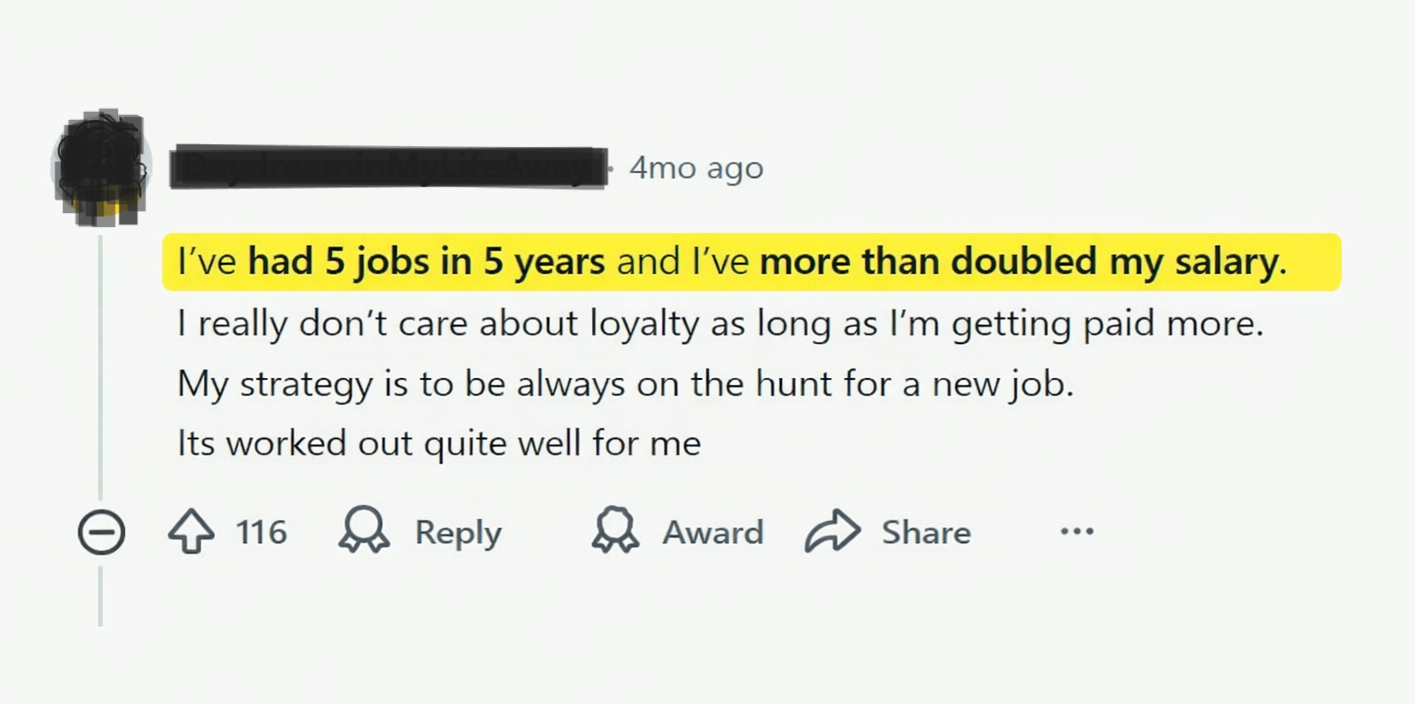
“Most CVs I see show a job change almost every other year. New U.S. accounting firms are popping up every few months, each offering slightly better pay than the last. Even high performers are jumping ship constantly.”
From the firm’s perspective, this is hard to sustain.
Training new hires, whether it’s firm culture, U.S. processes, technology, or client expectations, takes time and money. When people leave just as they become productive, the entire investment cycle breaks.
This is where leaders get visibly uncomfortable.
Several pointed to weak communication, poor attention to detail, and a lack of confidence in client-facing situations.
“One of our biggest issues is that many team members can’t clearly articulate what they do,” one leader says.
“Some struggle to introduce themselves professionally to U.S. clients. Add spelling errors and careless mistakes, and it becomes a serious problem.”
These aren’t minor issues. They directly affect client trust.
Also read: The Finance Story’s Mumbai Networking Event: Outsourcing, Offshoring, Fractional CFOs
Before jumping to conclusions, it’s important to understand that the picture isn’t one-sided.
So we spoke to employees as well, and their version of reality looks very different.
A major issue they highlighted was that, in practice, input (in terms of hours billed) often takes precedence over output or the quality of the work.
A Tax Associate at a Big 6 U.S. CPA firm explains that,
“The main focus is pulling as many client hours from the U.S. as possible to show strong offshore metrics,” he says. “During crunch periods, we’re expected to work across multiple clients simultaneously.
That sounds like great exposure, but there’s very little training or context provided. Quality inevitably suffers.”
Multiple employees pointed out that there is almost no emphasis on improving communication skills, critical thinking, or long-term development.
“I personally know senior managers who struggle to draft grammatically sound client emails,” one associate says. “But as long as hours are billed and revenue flows in, leadership seems satisfied.”
Employees say vague titles like Assistant Manager or Senior Manager come with overlapping and conflicting expectations.
“We’re expected to act as preparers, reviewers, project managers, and client coordinators — all at once,” one employee explains. “There are no clear boundaries, and that’s a leadership design issue.”
Hours are intense, especially at the preparer and reviewer levels.
Another Associate claims,
“During peak season, 300–350-hour months are not uncommon in our firm.
And now that Private Equity has come on board, long hours are no longer limited to busy seasons. Off-season demands are rising as well.”
He continues, “I have personally seen colleagues’ health deteriorate due to constant overwork. Others left the profession entirely because the pressure became unmanageable.”
One of them concludes:
“Many professionals I know are even willing to accept a slight pay cut in exchange for roles that do not compromise their physical or mental well-being.”
When you take all of this into account, it’s reasonable for employees to expect compensation that reflects their efforts.
Also read: GT UK fires 100 support staff: Grapevine says work offshored to India
Hiring is booming, and salaries are rising across all the US CPA Firms in India.
But have you paused to ask: Why is this happening, and how will it impact my career?
Here’s the reality: Private equity is pouring money into CPA firms to grow fast and exit in 2-5 years.
How will they achieve this?
The goal is simple:
And India sits at the centre of that playbook.
Expanding offshore headcount has become a due diligence checkbox.
Sometimes (yes, sometimes), massive hiring (e.g., “1,000 new employees”) is just to make the firm look attractive for a due diligence checkbox. Employees might be put on PIP (Performance Improvement Plans) or let go once the PE firm exits.
More people in India means lower costs, higher margins, and faster growth on paper.
Also read: U.S. Tax Partners at Armanino discuss the future of India-U.S. collab
India will continue to dominate complex, high-end accounting and tax work. The talent depth is undeniable.
But over time, more transactional and volume-driven work is likely to shift to lower-cost markets like the Philippines, a trend already visible in some firms.
When private equity exits arrive and growth expectations reset, inflated titles and compensation structures will face correction.
Big question: What happens then?
India remains the leader for complex, high-end accounting and tax work, while offshore expansion helps US firms fill talent gaps.
Big 6 and mid-sized US CPA firms are setting up GCCs in India, driving unprecedented demand for skilled talent.
Some transactional and client-facing roles may move to lower-cost countries like the Philippines, but India remains the undisputed leader for complex, high-end technical work.