Why Do Some Bosses Oppose Work From Home? New Research Says Productivity Isn’t The Only Reason | Explainers News



Last Updated:




The researchers argue that such leaders may therefore be more inclined to favour office attendance even when objective evidence about employee performance remains mixed.
As heavy monsoon rains disrupt life across several parts of India, stories have emerged of employees struggling to convince their employers to allow them to work from home. In some cases, workers have even resigned after their requests were denied despite flooded roads and severe commuting disruptions.
The timing has revived a question that has divided workplaces since the Covid-19 pandemic: if employees can do their jobs remotely, why are so many companies insisting they return to the office?
A new study suggests the answer may not be just about productivity. It may also be about leadership psychology.
A study published in the Journal of Vocational Behavior suggests that the personalities of leaders themselves may also shape how organisations view remote work. Researchers found that leaders displaying stronger narcissistic traits were significantly more likely to resist work-from-home arrangements, not necessarily because employees perform worse remotely, but because remote work changes the dynamics of power, visibility and control within organisations.
“Productivity depends on position requirements, an employee’s approach towards completing tasks, and implementation of company procedures. Office workplaces may help in collaboration and coming up with spontaneous solutions but remote work enhances productivity by allowing employees to work without commuting and distraction. Overall performance is determined more by what is accomplished than where the work is performed,” said Kumar Rajagopalan, Vice President, Strategic Initiatives and Country Head India at Dexian.
Why Do Some Bosses Insist Work From Office?
The global return-to-office movement has gathered momentum over the past two years. Technology companies, banks, consulting firms and multinational corporations have gradually tightened attendance requirements, asking employees to spend more days in the office each week.
The reasons appear straightforward. Employers argue that face-to-face interactions improve teamwork, help younger employees learn from experienced colleagues and encourage spontaneous conversations that often lead to innovation. Many executives also believe company culture is easier to build when employees work together in person rather than through video calls.
Employees, however, often see the issue differently. For many, remote work has eliminated long commutes, reduced daily expenses and offered greater flexibility to balance work with family responsibilities. Surveys across several countries continue to show that a large proportion of knowledge workers prefer hybrid work over returning to the office five days a week.
This has created one of the biggest workplace tensions of the post-pandemic era. Companies insist that office attendance benefits the business. Employees increasingly believe flexibility improves both productivity and quality of life.
“Many managers see the link between being physically present in the workplace and accountability. Some of them also raise concerns regarding any potential communication failures, losses in customer service, or discipline issues. However, following strict attendance policy during the times of crisis may harm employee trust, morale, and commitment to the company,” said Rajagopalan.
Is It About Leadership Personality?
The study examined whether a leader’s personality influences attitudes towards remote work. Researchers found that leaders displaying stronger narcissistic characteristics were significantly more likely to oppose remote work arrangements.
Remote work naturally reduces opportunities for direct supervision, face-to-face interaction and visible displays of authority. Managers have fewer opportunities to observe employees in person, hold spontaneous meetings or reinforce their organisational presence. For leaders who place a high value on visibility, status and control, these changes may feel uncomfortable.
The researchers argue that such leaders may therefore be more inclined to favour office attendance even when objective evidence about employee performance remains mixed.
Importantly, the study does not suggest that every manager supporting return-to-office policies is narcissistic. Nor does it claim that office work lacks genuine business benefits. Instead, it highlights that leadership psychology may influence workplace policies alongside practical considerations such as collaboration, security, customer interaction and organisational culture.
In other words, decisions about where people work may sometimes reflect how leaders prefer to lead, not just how employees perform.
Work From Home vs Work From Office: Which Is Better?
There is still no universal answer to whether remote work is better than office work. Much depends on the nature of the job.
Research increasingly shows that knowledge workers often maintain, or even improve, their productivity while working remotely, particularly when tasks require concentration and independent problem-solving. Employees also report higher job satisfaction, lower stress from commuting and greater flexibility. However, remote work also has limitations.
Creative brainstorming, mentoring younger employees and building relationships across teams can become more difficult when colleagues rarely meet in person. New recruits may take longer to integrate into company culture, while informal conversations that often spark ideas become less frequent.
Career progression presents another challenge. Employees working remotely may have fewer opportunities for visibility with senior leaders, making promotions and networking more difficult than for colleagues who regularly interact with managers in person.
“Neither work model is superior in itself, remote work is well-suited for job requiring concentration, while in the office employees can come up with new ideas while brainstorming, getting comments from their colleagues and working together. Hybrid option is believed to be optimal and will allow companies to ensure productivity of work while providing employees with necessary flexibility,” said Rajagopalan.
How Has Work Evolved Since Pandemic?
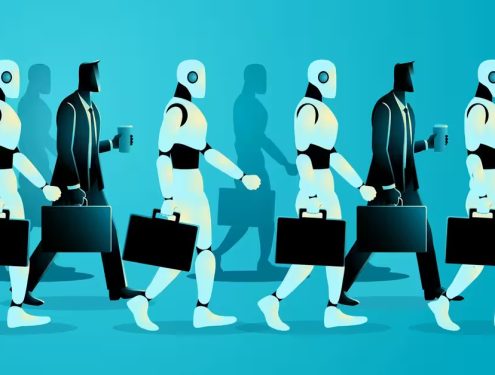
AI has reshaping white-collar jobs, automated routine tasks and increased demand for creativity, collaboration and continuous learning. At the same time, companies are redesigning offices to encourage teamwork rather than rows of permanent desks, reflecting the expectation that employees will come in primarily for collaboration instead of individual work.
Commercial real estate has also become part of the discussion. Many organisations have invested heavily in office spaces and now face pressure to justify those costs through higher occupancy.
Meanwhile, employee expectations have shifted permanently. Younger professionals entering the workforce increasingly see flexibility as a standard workplace benefit rather than a temporary pandemic arrangement. For many, the ability to work remotely influences where they choose to work almost as much as salary or job title.
Rather than disappearing, hybrid work is gradually becoming the new normal, with companies experimenting to find the right balance between flexibility and face-to-face collaboration.
Are Companies Responding To Business Needs Or Management Instincts?
Large IT companies have steadily increased office attendance requirements, while many global capability centres (GCCs) continue to favour hybrid work models that combine flexibility with periodic in-person collaboration.
The competition for skilled talent is adding another dimension to the debate. Companies are increasingly competing not just on salaries but also on employee experience, workplace flexibility and organisational culture.
“Flexibility of work conditions has become an important factor for customers choosing hiring companies. Potential employees now evaluate flexible ordering, working schedule and wellness programmes when making their choice,” said Rajagopalan.
For younger professionals, especially Gen Z employees, flexibility is often viewed as a sign of trust rather than simply a workplace perk. Organisations that insist on rigid attendance policies may find it harder to attract and retain talent in a competitive labour market.
At the same time, Indian managers face their own challenges. Leading distributed teams requires new skills, different performance metrics and greater reliance on outcomes rather than physical presence. The success of hybrid work ultimately depends as much on managerial capability as on employee discipline.
“Organisations with implemented digital processes rely more on activity requirement indicators to take decisions regarding the workplace. There are still companies where managers trust their intuition regarding employee attendance but fail to understand that visibility is not a measure of productivity. Progressive companies are now moving toward the idea that performance practices should be used instead of attendance supervision,” Rajagopalan pointed out.
As AI reshapes the workplace, companies may increasingly compete on how effectively they manage flexible teams rather than how many days employees spend at their desks.

Shilpy Bisht is a News Editor at News18, where she leads the English app operations. She writes on world affairs, health, AI, career, business, and issues affecting women and children. A former print …Read More

Stay Ahead, Read Faster
Scan the QR code to download the News18 app and enjoy a seamless news experience anytime, anywhere.