
Delhi gig workers trapped in endless shifts, algorithmic control, vanishing rights

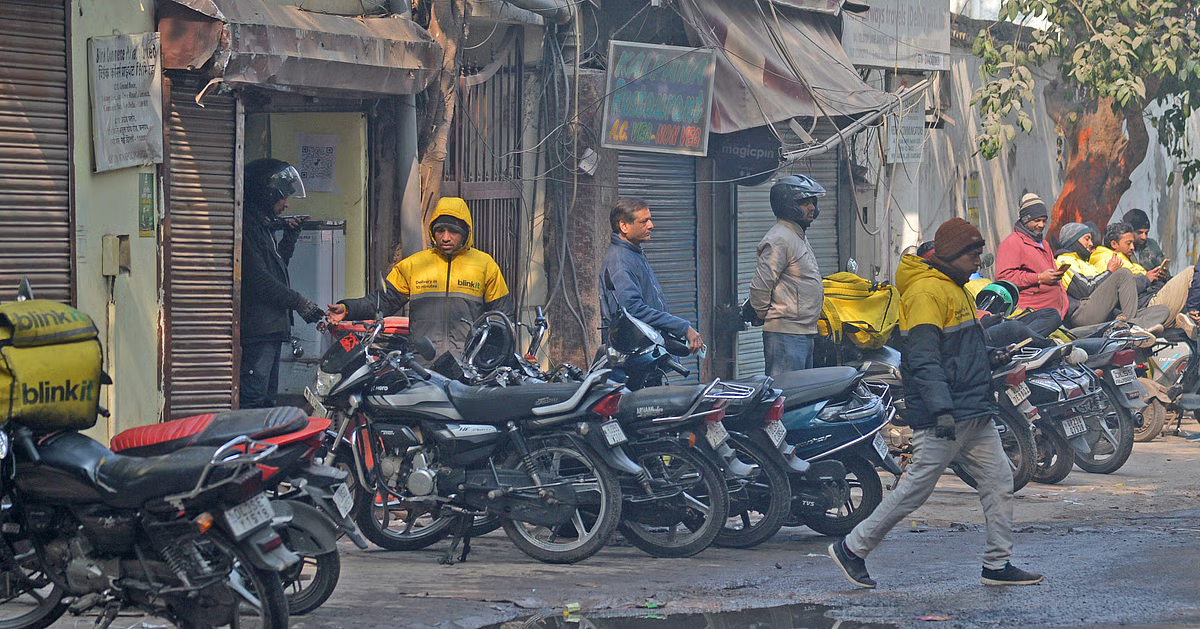

Girish has been working for a year. He describes the job as “modern-day slavery”. “Clients are gods,” says Girish (name changed), a Blinkit delivery partner in his 20s. “And us, we are helpless,” he said. Girish said the system is designed to exploit workers’ vulnerability.
“They take work from us in such a way that you end up feeling sorry for your own helplessness,” he says. Despite completing 15–16 deliveries a day, he struggles to make ends meet. Even a single negative rating can lead to the immediate blocking of a delivery partner’s ID. “To get back on the platform, we have to pay again. There is no justice because there is no place to even explain our side,” he added.
When safety becomes optional
Sexual harassment is another reality rarely discussed for these gig workers. One of the gig workers associated with the Urban Company recounts an incident involving a transgender customer who allegedly touched him inappropriately. “I had to run, leaving my things behind.” He added,
“This customer touched me inappropriately during a service. I complained. Still, the same customer booked me again four times. Earlier the company used to call us to ask for a reason for poor ratings from a customer, but now we don’t receive any calls; we have to attend to the customer irrespective of our wish.”
Despite filing a complaint through the helpline, no action was taken. Instead, the customer filed complaints that affected the worker’s ratings. His ID was eventually blocked. “How do you justify this? Our complaints go into a box that never opens,” he said.
Most platforms now rely on AI-run helplines. Human responses are rare. Callbacks, when they come, often arrive 20-30 minutes later – too late in situations involving harassment or danger.
“If something happens to us at 10 or 11 at night, who will help? The app?” he said.