This ‘AI employee’ can work non-stop and 24/7


The moment Oracle sent emails to thousands of its employees stating that they no longer fit their roles, it felt like a shock wave. For many, the message arrived early in the morning. One email, and everything changed.
The layoffs made headlines. But what is unfolding beyond such announcements may be even more unsettling.
Across the technology industry, companies are increasing investments in automation and artificial intelligence. At the same time, a growing number of startups are building systems designed to handle tasks that were once done by employees. Chatbots, AI agents and now so-called AI workers are being positioned as faster and lower-cost alternatives.
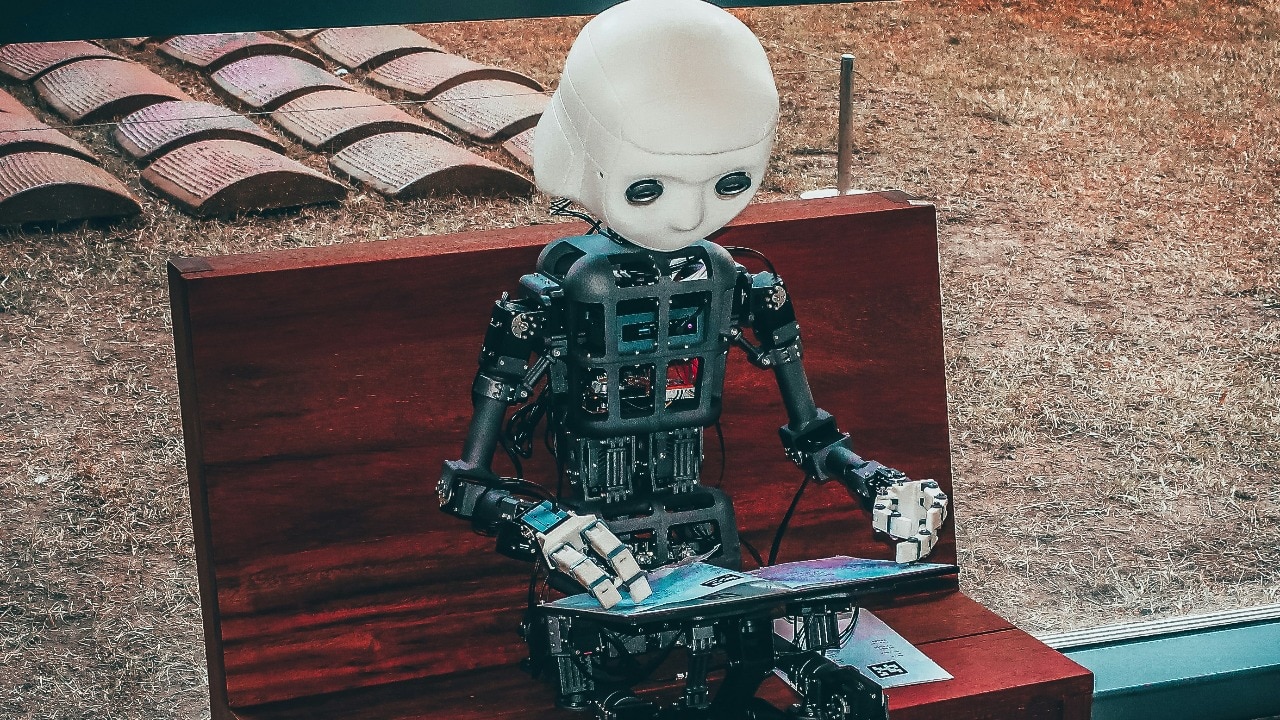
To some extent, companies are also changing how they describe these systems. They are no longer calling them tools alone. In some cases, they are being introduced as employees.
One such product, Junior, has been presented as “the first AI employee, for any role”.
The company behind the product says more than 10 teams are already working with Junior every day.
Unlike earlier AI tools that were marketed as assistants, copilots or software add-ons, Junior is being introduced more like a digital worker with a place inside a company’s structure.
According to its pitch, the AI comes with its own identity, organisational memory, and the ability to work in a self-driven way.
AI systems are no longer limited to answering questions or generating text. Many of them are now being built to handle tasks across workflows, often without constant human input.
At Salesforce, AI agents under its Agentforce platform are being used in sales and customer operations. At Microsoft, Copilot systems are being integrated across enterprise tools to manage queries and automate processes.
Oracle is deploying AI in business systems, while IBM uses its watsonx platform to manage IT workflows and detect issues.
These systems do not take breaks. They do not slow down. They operate continuously.
For years, AI was marketed as a co-pilot, something that supports human work. That framing is now shifting. The new generation of AI agents is being designed to take ownership of tasks, carry context across systems, and operate with minimal supervision.
In sales, AI can identify leads, draft outreach and track responses. In customer support, it can handle large volumes of queries at the same time. In software teams, AI is now writing, reviewing and fixing code in cycles that earlier required multiple engineers.
What makes this shift different from earlier waves of automation is how quietly it is unfolding.
Companies are not always announcing that AI is replacing workers. Instead, they are hiring fewer people, restructuring teams or redistributing work with the help of AI systems.
An AI agent may not appear in official headcount. But it still performs tasks, often at scale.
The result is a gradual change in how organisations operate. Smaller teams, supported by AI systems, are now able to deliver the same output that once required larger groups.
Products like Junior are not the starting point of this change. They are a signal of where things may be heading.
For workers, the impact is uneven.
AI can help individuals work faster and manage more tasks. At the same time, it reduces the need for roles built entirely on routine work.
This is particularly concerning for early-career professionals, who often rely on such roles to enter the workforce and gain experience.
There are also questions that companies are still trying to answer. If an AI system makes a mistake, who is responsible? How do organisations review decisions made by systems that operate continuously? And what happens to workplace culture when some colleagues are not human?
But one thing is becoming clearer: the conversation is no longer just about AI helping employees. It is about how much of the work it may begin to take over.
– Ends