
Google pilots AI-assisted interviews for software engineering roles, TechGig

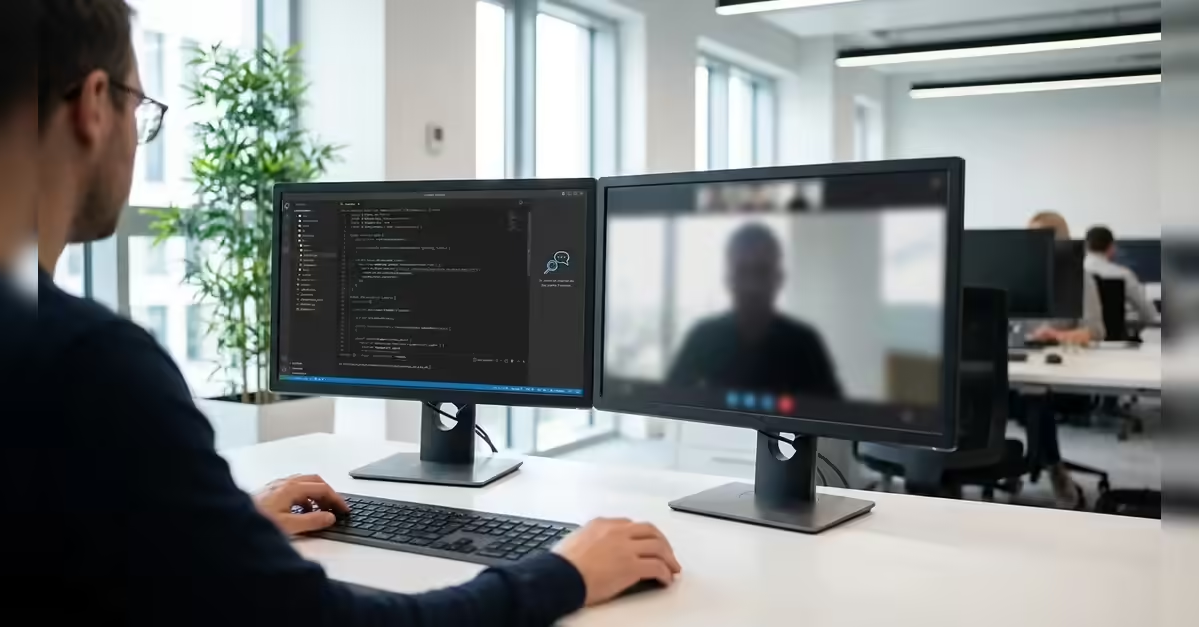

Google is piloting a new interview format for software engineering candidates, allowing them to use an artificial intelligence (AI) assistant during technical rounds, as reported by Business Insider.
This initiative reflects the deep impact of AI on software development and seeks to align hiring practices with the contemporary engineering landscape.
The tech giant’s new approach will permit candidates applying for junior to mid-level engineering roles to use Google’s own Gemini AI during the ‘code comprehension’ round. In this stage, applicants will be tasked with reading, debugging, and optimising an existing codebase.
Interviewers will also evaluate ‘AI fluency’, which includes prompt engineering, output validation, and debugging skills. Brian Ong, Google’s vice president of recruiting, told Business Insider that the company is “always evolving our interview processes to ensure we’re recruiting and hiring the best talent.
As a part of that, we’re rolling out a pilot for software engineering interviews to be more reflective of how our teams are operating in the AI era.”
An internal document, cited by Business Insider, describes the new format as “human-led, AI-assisted,” designed to simulate how engineers work in the generative AI (GenAI) era.
Alongside the AI-assisted coding round, Google is implementing other changes to its interview process:
These pilots are set to begin across Google Cloud and its platforms and devices unit this month.
Google’s decision follows similar initiatives by other technology companies. Firms like Canva and AI coding startup Cognition already permit candidates to use AI tools during their interviews.
Emily Cohen of Cognition drew a comparison, stating that banning AI in interviews is akin to “asking a kid to take a math test without a calculator.”
The shift underscores the increasing dominance of AI-generated code in software development. Google stated in April that three-quarters of new code within the company is now written by AI.
OpenAI’s Greg Brockman recently noted that AI’s contribution to code generation has surged from 20% to 80% in just a few years.