RAS-2023 results analysis reveal rural dominance among candidates: 56% selected from rural areas, 60% already in govt or private jobs; Jaipur and Rajasthan University lead in interviews – Rajasthan News



Ajmer19 hours agoAuthor: Sunil Kumar Jain
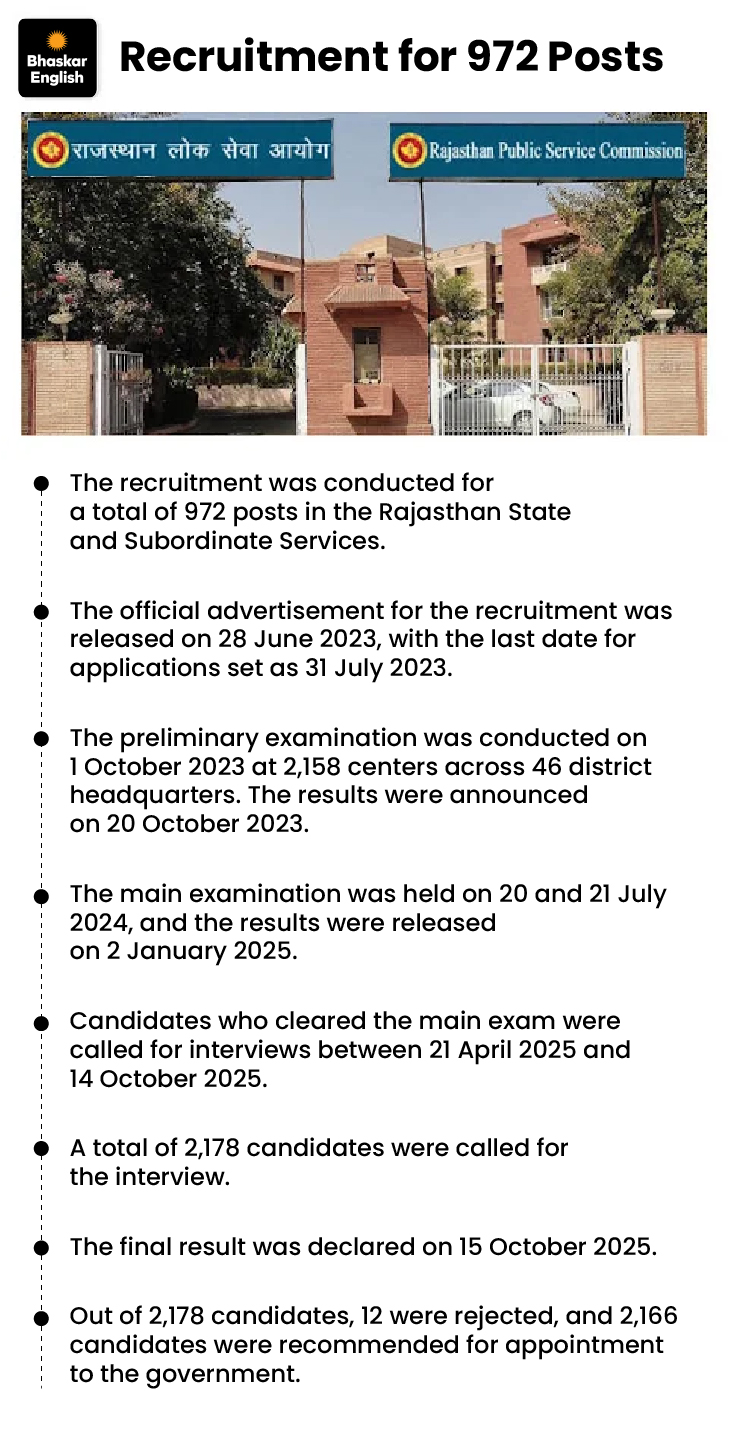
Rajasthan Public Service Commission has released a detailed analysis report of the RAS-2023 result
The Rajasthan Administrative Service (RAS) 2023 results show that over half of the successful candidates come from rural areas. According to a detailed analysis by the Rajasthan Public Service Commission (RPSC):
Out of 2,166 selected candidates, 1,210 (55.86%) are from rural regions.
Only 956 candidates (44.14%) hail from urban areas.
The RPSC considered candidates’ schooling location as the basis for rural-urban classification.
Significant number already employed
The analysis also revealed that a majority of the selected candidates were already working:
This indicates that prior professional experience is common among successful RAS aspirants.

Rajasthan Public Service Commission has considered the location of candidates’ school education as the basis of their background. Out of a total of 2166 candidates, 1210 (55.86 percent) candidates are from rural areas.
Interview trends: Jaipur and Rajasthan University lead
Following RU, RTU Kota and MDS University Ajmer had the next highest representation.
| Category | Selected Candidates | Percentage |
| Rural Area | 1210 | 55.86% |
| Urban Area | 956 | 44.14% |
| Total Selected | 2166 | 100% |
Academic excellence: First division and postgraduates dominate
The educational qualifications of the selected candidates reflect high academic achievement:
This suggests that academic performance continues to play a significant role in selection.
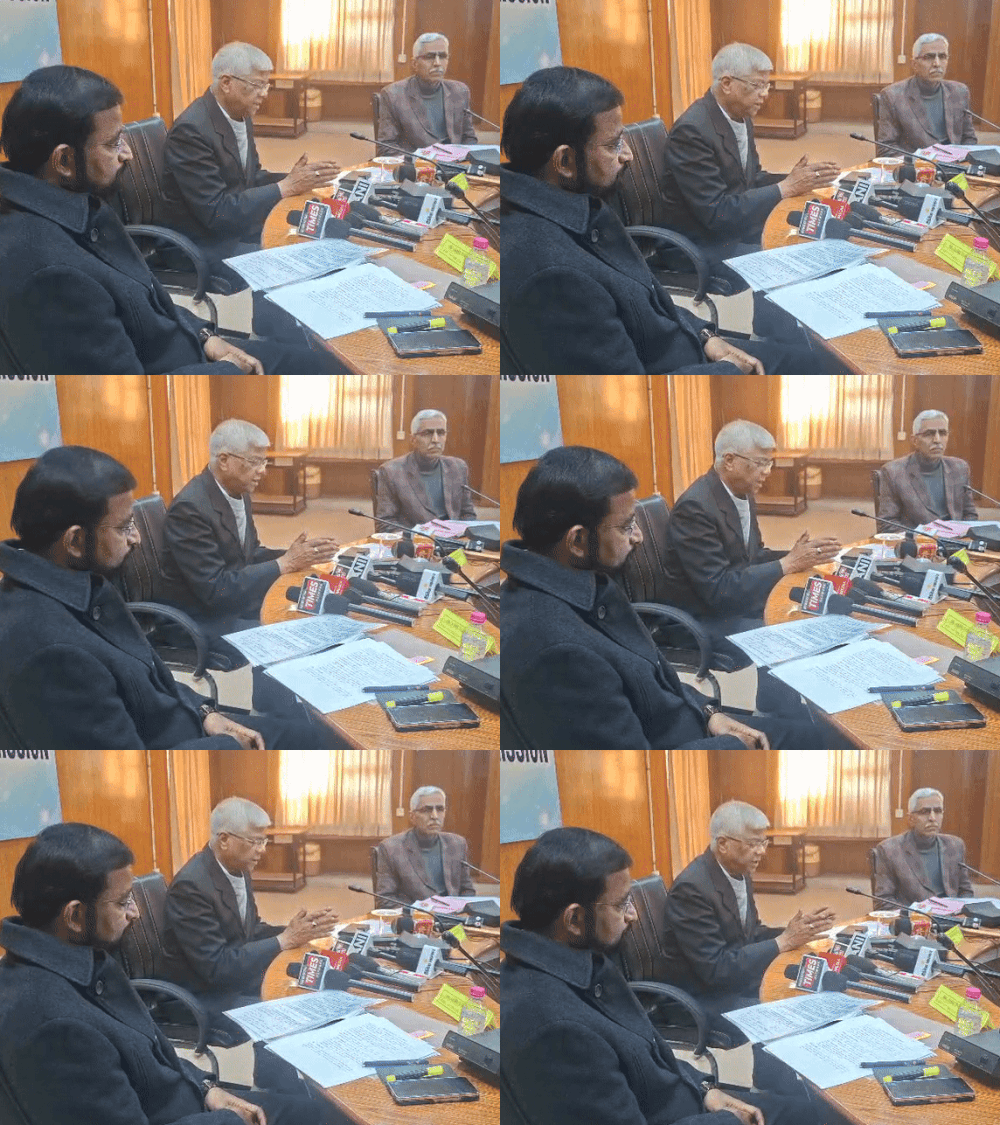
Commission Chairman Utkal Ranjan Sahoo, along with Secretary Ramniwas Mehta and Chief Examination Controller Ashutosh Gupta, providing information to journalists.
Age profile of selected candidates
Analysis of the age distribution shows a mix of young and slightly older aspirants:
This indicates a preference for energetic youth while still accommodating slightly older candidates.